HOAs create structure inside neighborhoods. They also create friction when energy upgrades enter the conversation. Solar often sits right at that intersection.
For homeowners navigating solar rights law in Colorado, the legal framework matters as much as the HOA rulebook. That law defines boundaries between private property rights and community guidelines. ARE Solar has worked with Erie homeowners where that balance determined project feasibility from day one.
Solar is not just a home improvement decision. It is a regulated interaction between state law and private governance.
Understanding the Solar Rights Law in Colorado
Colorado law limits how far HOAs can restrict solar installations. It does not eliminate HOA authority entirely. It defines where that authority stops.
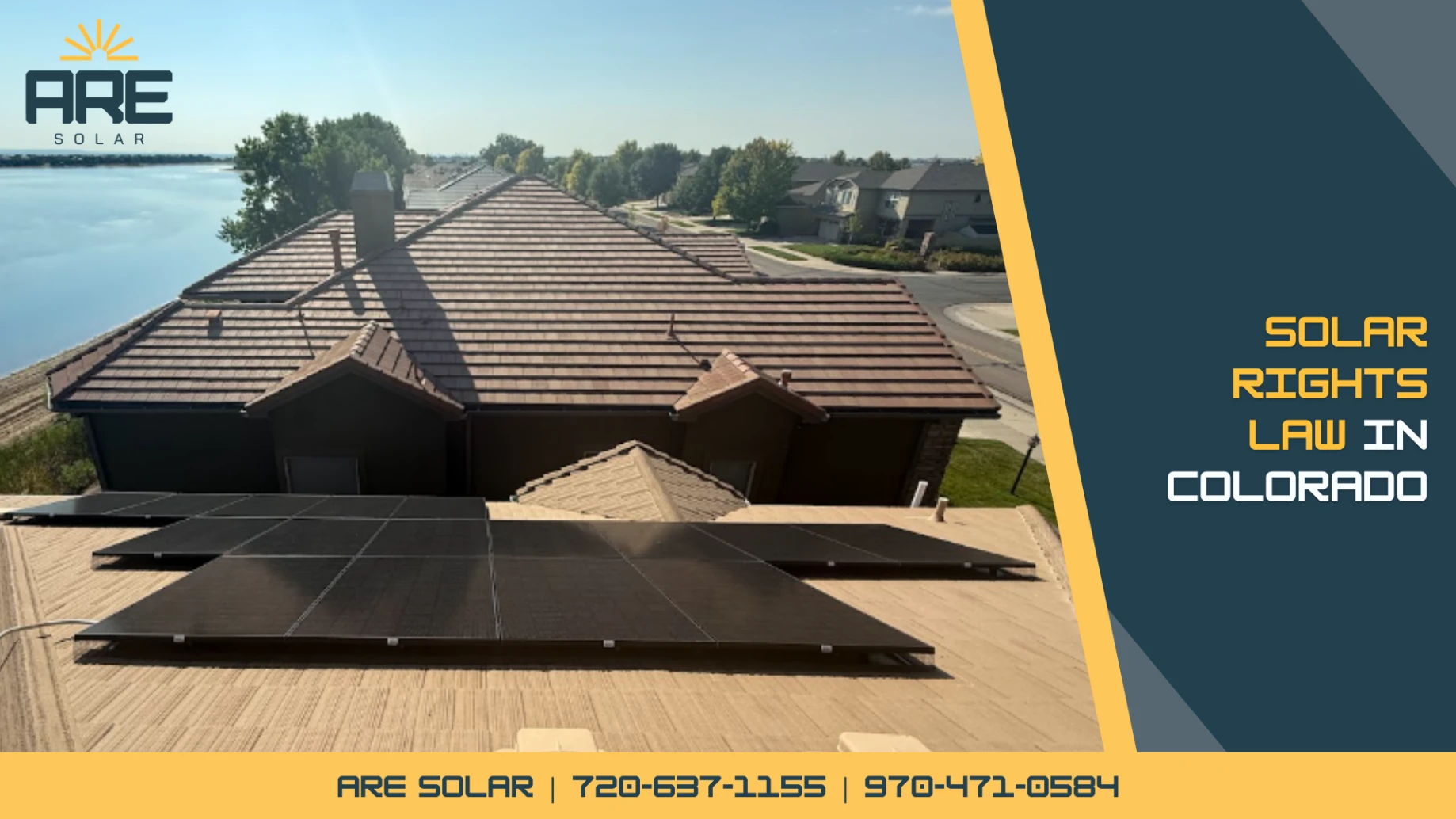
The solar rights law in Colorado originates from Colorado Revised Statutes § 38-30-168. It prevents HOAs from prohibiting solar energy devices outright. It also restricts unreasonable conditions that increase cost or reduce system efficiency.
You can review the current Colorado Revised Statutes through the Colorado General Assembly’s official website: https://leg.colorado.gov/laws/colorado-revised-statutes
The law allows HOAs to set reasonable aesthetic guidelines. Those rules cannot materially reduce system performance or make installation cost-prohibitive. That distinction is where most disputes begin.
ARE Solar has seen approvals hinge on small design adjustments. Panel placement and visibility often become negotiation points. Those adjustments still must comply with energy performance standards.
This is not a loophole system. It is a structured balance between property rights and neighborhood design control
HOA Solar Panels in Erie, CO: What Homeowners Actually Experience
HOA rules in Erie vary by community. Some are flexible. Others are highly specific about roof visibility and equipment placement.
For HOA solar panels in Erie, CO, the approval process often begins with design review submissions. Those submissions include layout drawings, electrical diagrams, and sometimes visibility studies from street view.
The state law still applies during this process. HOAs cannot reject solar solely based on appearance preferences if performance is affected. That principle is central to how disputes are evaluated.
The solar rights law in Colorado also protects homeowners from excessive delays. HOAs must respond within defined timelines. Extended silence can be treated as approval under certain conditions.
ARE Solar often supports homeowners during this stage. That includes providing technical documentation that aligns with HOA review requirements. Clear engineering details reduce back-and-forth during approval cycles.
Disputes usually come down to placement, not permission. South-facing roof space is often the most contested area.
Where HOAs Still Have Authority
Solar rights do not remove HOA governance. They define its limits.
HOAs can regulate installation placement when alternatives exist. They can request screening methods for visibility reduction. They can also require reasonable design standards consistent with community architecture.
However, those requirements cannot block functional solar access. That includes restrictions that reduce output beyond acceptable thresholds.
The Colorado legislature clarifies this balance within the statute. It protects solar access while preserving community design standards.
ARE Solar approaches these cases by modeling production impact before final design submission. That step helps homeowners understand tradeoffs before HOA review begins.
To be real, most conflicts are solved in design, not law. Small adjustments often resolve approval concerns without performance loss.
System Design Strategy for HOA-Compliant Solar
Design matters more in HOA communities than anywhere else. It becomes both technical and visual.
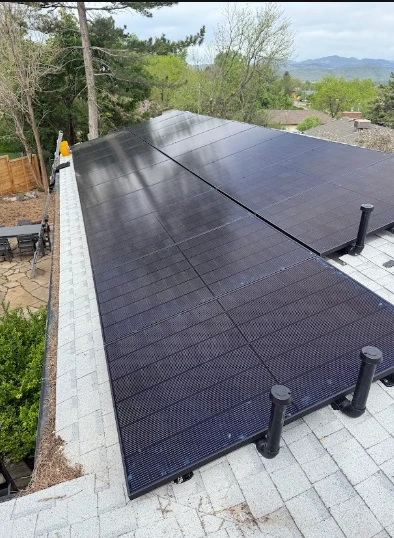
Roof geometry, panel tilt, and edge alignment all influence approval outcomes. Flat or low-profile mounting systems are often used to reduce visibility concerns.
Electrical routing also plays a role. Clean conduit paths reduce objections tied to exterior appearance. That detail is often overlooked in early design drafts.
ARE Solar frequently adjusts layouts to preserve production while reducing street-facing visibility. That balance is not guesswork. It is calculated based on irradiance, shading, and roof orientation.
The goal is simple. Maintain output without triggering unnecessary review friction.
Every adjustment still has to respect Colorado conditions. Snow load, wind exposure, and roof structure remain non-negotiable inputs.
Enforcement, Disputes, and Real-World Outcomes
When HOA conflicts escalate, documentation becomes critical. State law typically guides resolution before legal escalation is needed.
Most disputes are resolved through revised plans or clarified interpretations of guidelines. Courts generally interpret solar access laws in favor of installation rights when performance is impacted.
ARE Solar has worked on projects where initial HOA denial was reversed after technical review. Those cases usually involved misunderstood shading or exaggerated visibility concerns.
The solar rights law in Colorado does not eliminate disagreement. It gives structure to resolve it without arbitrary restriction.
Homeowners should expect process, not frictionless approval. Solar is still construction work. It still requires coordination between stakeholders.
FAQ
1. Can my HOA legally block solar panels in Erie, CO?
No. HOAs cannot completely prohibit solar installations under Colorado law. They can regulate placement and appearance within reason. However, they cannot enforce rules that significantly reduce system performance or increase installation costs.
2. What does Colorado’s solar rights law actually protect?
It protects a homeowner’s right to install solar energy systems. It limits HOA restrictions that interfere with system performance. It also requires HOAs to follow reasonable review processes and timelines for approval.
3. How long does an HOA have to respond to solar requests in Colorado?
HOAs must respond within a reasonable timeframe defined by state statute. Delays beyond the required review period can be interpreted as approval depending on circumstances. Documentation and submission records are important during this phase.
4. Can HOA rules force me to move solar panels to a less efficient area?
Not if it significantly reduces performance. Colorado law prevents restrictions that materially impact system output. Minor placement adjustments may be allowed if they do not affect energy production in a meaningful way.
5. What is the best way to get HOA approval for solar in Erie?
Clear technical documentation is key. Submitting accurate layouts, production data, and visual impact assessments helps streamline approval. Working with experienced installers like ARE Solar reduces design conflicts and improves compliance outcomes.
Solar Rights Are About Balance, Not Conflict
HOAs exist to maintain neighborhood consistency. Solar rights exist to preserve energy access.
Those two systems overlap in ways that require clarity, not assumption. Colorado law defines that boundary with specific protections for homeowners.
For solar rights law in Colorado, Erie represents a common testing ground. Newer communities often face the most detailed HOA rules. Older laws still apply the same way.
ARE Solar treats these projects as engineering first. Legal clarity matters. Design discipline matters more. Systems are built to perform, then adjusted to comply.
When both sides align, solar moves forward without unnecessary delay.
That is the structure the law was built to support. Contact ARE Solar today to discuss your HOA requirements and move your Erie solar project forward with confidence.