How it works
A retrofit device, not a replacement system
CUES is a retrofit device, not a replacement system. It fits directly over an existing thermostat or probe.
Inside, a food-safe wax simulant matches the thermal mass and conductivity of real food. The refrigerator reads that instead of the air around it.
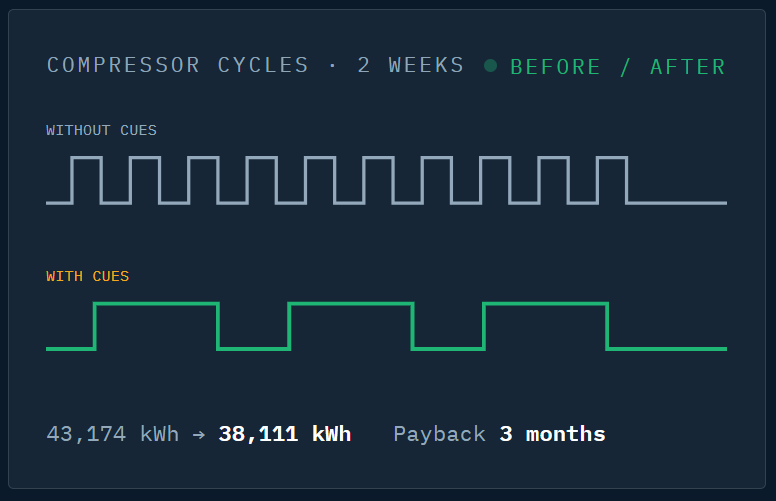
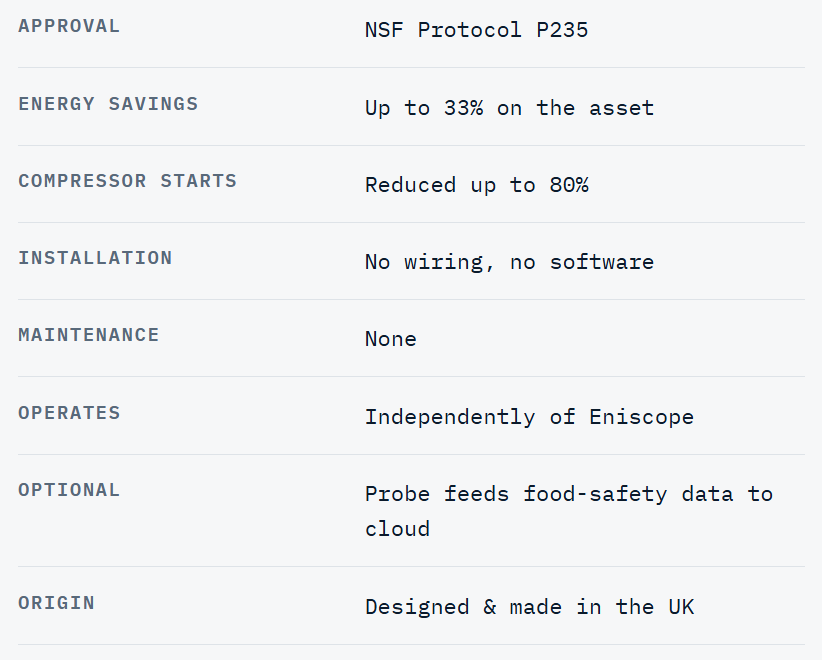
The result is a slower, steadier cycle. Compressor starts drop by up to 80 percent, because the system now responds to food, not draft.
Fewer starts mean fewer energy spikes. Documented energy savings run up to 33 percent on the refrigerated asset.
NSF-Approved, Zero Maintenance
CUES carries NSF Protocol P235 approval for food storage environments.
Installation is simple: no wiring changes, no software, no ongoing upkeep. Once it’s placed, it stays in place.
It works independently of Eniscope and Air Technology, though the three combine well into a building energy management system. Add a temperature probe, and CUES can feed food-safety data back into the same cloud platform.
Results Across the Best Energy Network
Safeway tested CUES on a frozen warehouse compressor in Canada, monitored by Best Energy’s partner network. Energy use dropped from 43,174 kWh to 38,111 kWh over a two-week trial, a 12 percent reduction, with payback in three months.
At Kings Point, a Florida retirement community, CUES was one part of a combined retrofit. It included LED lighting and variable frequency drives. Best Energy’s network documented a 35 percent cut in the property’s overall annual energy spend from that combined package.
Refrigeration doesn’t need to run harder than the food demands. It needs to know what the food is actually doing, and react to that, not the air.
Every Cycle You Don’t Fix
Every compressor cycle a refrigerator doesn’t need is a cost that repeats. Not once — every hour, every day, for as long as the unit runs.
That waste is invisible on a utility bill. It only shows up as a total, months after the fact.
CUES fixes the cause, not the symptom. One retrofit, placed once, keeps paying back for as long as the equipment operates.
The Safeway trial paid for itself in three months. That result came from one frozen-warehouse compressor over a two-week trial. It shows what one documented project achieved, not a typical payback period. Kings Point provides a useful contrast. Its combined retrofit was estimated to pay back in four years. The project came in at two years.