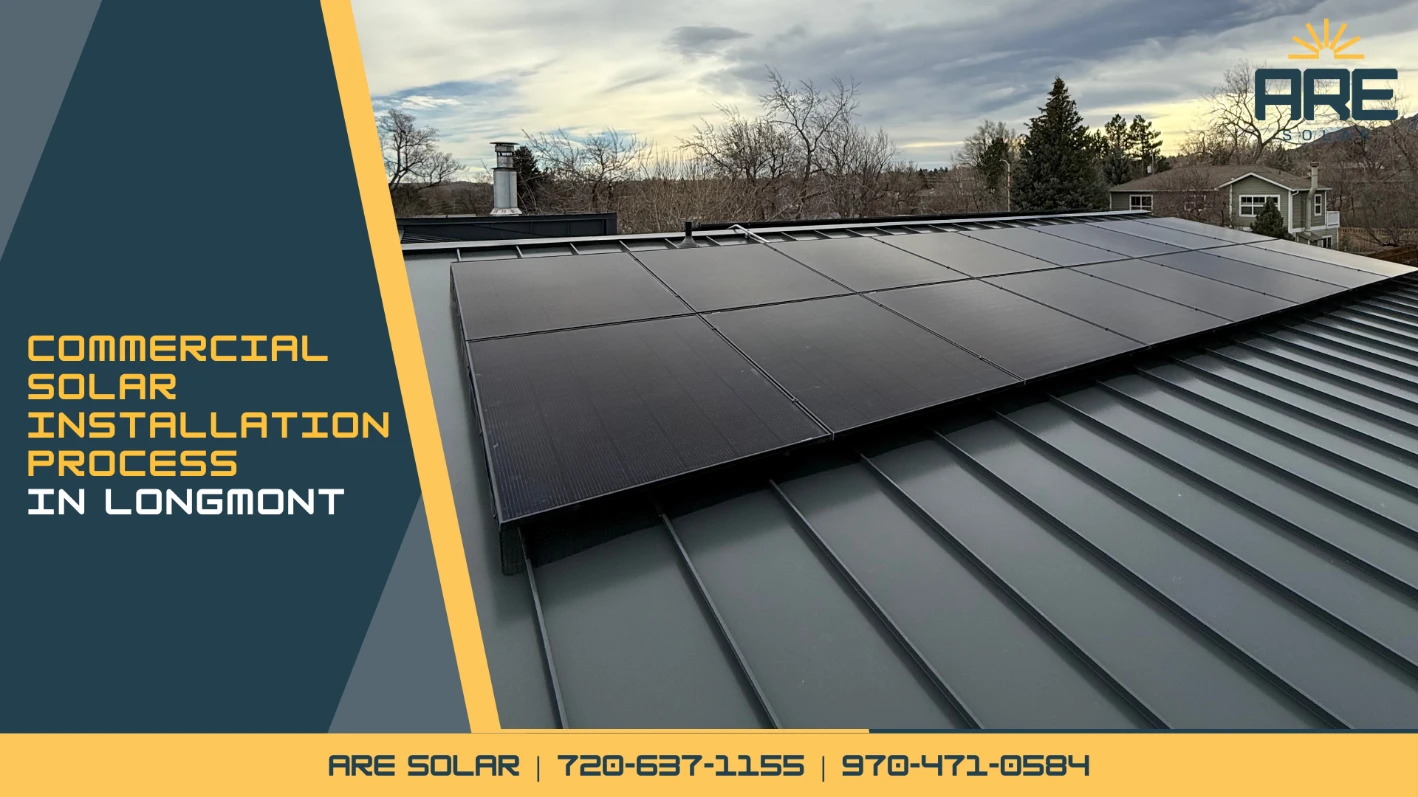
Zero Downtime: The Commercial Solar Installation Process in Longmont
The commercial solar installation process in Longmont doesn’t have to interrupt your business. A business continuity install starts with coordinated planning. Rushing that sequence is what causes downtime. Building around your operation, instead of through it, prevents it entirely.
Longmont’s own electric utility, Longmont Power and Communications, reviews every commercial interconnection. Plan for it, and it never touches your operating hours.
Longmont’s building department turns around a complete solar permit in five business days on its expedited track. Most commercial systems do not qualify for that track. Systems needing an electrical service upgrade take longer. We tell you which one your building needs, before installation begins.
How Long Does a Commercial Solar Installation Take in Longmont?
Timeline depends on three things: system size, roof type, and utility review. A straightforward rooftop system may qualify for Longmont’s Solar ABC’s Expedited Permit Process.
Complete applications without an electrical service upgrade get a decision in five business days. That expedited track is built for small, residential-scale systems. Its ceiling is 13,440 watts of AC inverter output, which most commercial projects clear. Larger systems go through standard plan review. Bigger systems, or ones needing upgrades, take longer. LPC applies different requirements based on system size and grid conditions. Commercial systems at 100 kVA or larger face additional requirements. We scope that review before your project starts, not after. Permits are reviewed at the city’s Building Inspection Division.
Why Longmont’s Layout Changes the Install Plan
Longmont’s business base runs wide, from breweries to bioscience labs to warehouses along the Diagonal Highway. Each one needs a different continuity plan. A brewery can’t lose refrigeration mid-shift. A warehouse can’t lose loading-dock power during a delivery window.
Longmont already knows how to permit commercial-scale solar. Longmont approved a 165-kilowatt rooftop system for Village on Main, at 600 Coffman Street. That is a commercial-scale system moving through the city’s own process. The project shows that commercial-scale rooftop solar is already part of Longmont’s built environment. For a business considering its own system, the lesson is straightforward: larger projects benefit from careful coordination.
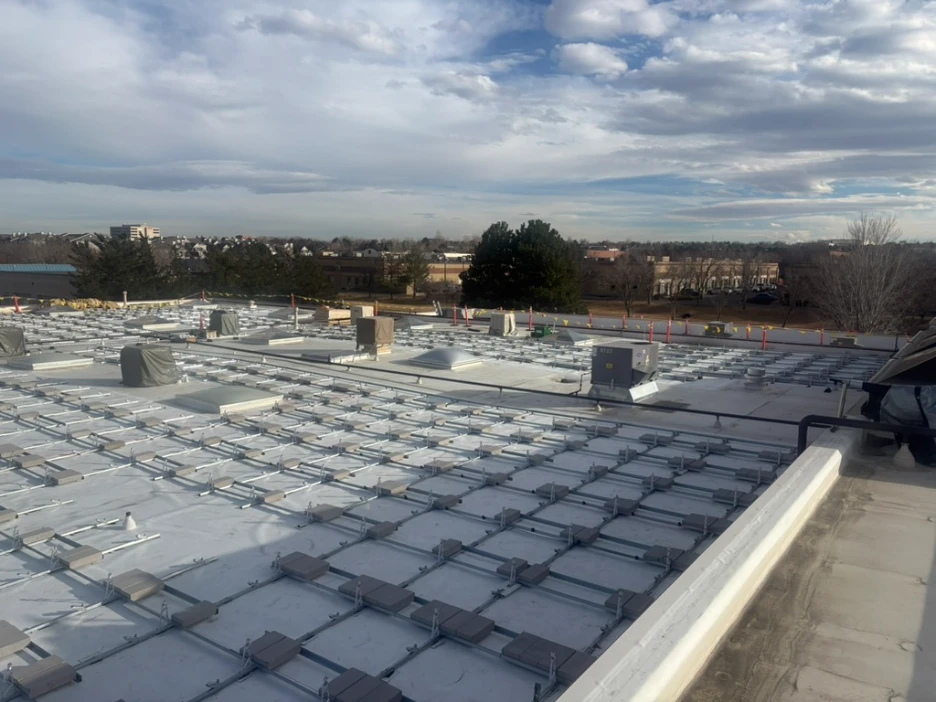
We map your critical loads before touching the roof. Refrigeration, server racks, production lines, whatever can’t go dark gets identified first. That’s continuity planning, done before the racking arrives. Then we schedule the disruptive work around it.
The Installation Sequence, Step by Step
The commercial solar installation process in Longmont follows the same phases, in order.
- We perform the site/roof assessment and system sizing.
- We submit the building permit and required interconnection documents.
- LPC engineers review the checklist and one-line diagram.
- The system is installed and inspected.
- LPC configures the meter and performs testing at its discretion.
- LPC issues PTO documentation after the meter is set.
Does the Power Go Out During Installation?
A brief utility-related interruption may be required during final interconnection and meter work. We schedule that window in advance, in writing.
It’s short. We schedule it outside your peak hours.
Facilities with critical loads may need temporary backup power. We identify that requirement during continuity planning. For offices, we plan around servers, communications equipment, security systems, and occupied work hours.
Questions That Predict a Zero-Downtime Build
A lower bid often means a different sequence, not just a different price. Ask a few direct questions before signing.
- Will the crew stage materials on-site, or block your loading dock for a week?
- Do they coordinate the LPC interconnection window directly, or leave that step to you?
- Do they know which permit track your system size qualifies for in Longmont?
- Will your system sit unfinished if a delay hits, or does the same crew see it through to PTO?
A vague answer to any of these is the answer.
What Zero Downtime Looks Like On-Site
A construction crew on your property has its own footprint. Where they park, stage materials, and run cords matters as much as the wiring itself. We plan that footprint before the first pallet arrives.
Longmont restricts audible power-tool use after 10 p.m. and before 7 a.m. We schedule loud phases, like rooftop cutting, inside code-compliant hours. Debris stays contained on-site, per city code, not scattered across your lot. Your customers never see a mess.
Crew size scales with the roof, not a fixed formula. A small retail install might run two technicians for a few days. A large warehouse roof might need a full crew working in shifts.
FAQ: Commercial Solar Installation in Longmont
Will my business need to close during the solar installation? Usually not. Most of the work happens on the roof or at the exterior electrical panel. Your business stays open through nearly all of it. The one exception is the brief utility disconnect for interconnection. We schedule that around your hours.
What happens if a delay hits mid-project? We tell you the fact and the next step immediately. A permitting backlog or a utility scheduling delay doesn’t mean your system sits unfinished. The same crew finishes what it started, through PTO.
Does Longmont Power & Communications review commercial solar projects? Yes. LPC engineers review the interconnection documents for solar projects connected to its electric distribution system. The process includes an interconnection checklist and one-line diagram. It is followed by inspection and meter configuration after installation. The exact requirements can vary by project, so we confirm the applicable process before construction begins.
What Colorado conditions affect installation scheduling in Longmont? Front Range wind and hail events can pause exterior work for safety. We build schedule buffers for weather. Structural review accounts for Longmont’s applicable snow and wind design criteria before installation begins.
Will construction noise disrupt my customers or tenants? We schedule the loudest work, like rooftop cutting, within Longmont’s noise ordinance hours. Quieter phases, like conduit runs, can happen during business hours without issue. Tenants rarely notice more than an extra truck in the lot.
Let’s Build Your Timeline
Every Longmont business runs on a different clock. We build the installation plan around yours, not the other way around. Call ARE Solar, and let’s map out a plan that keeps your doors open, start to finish.