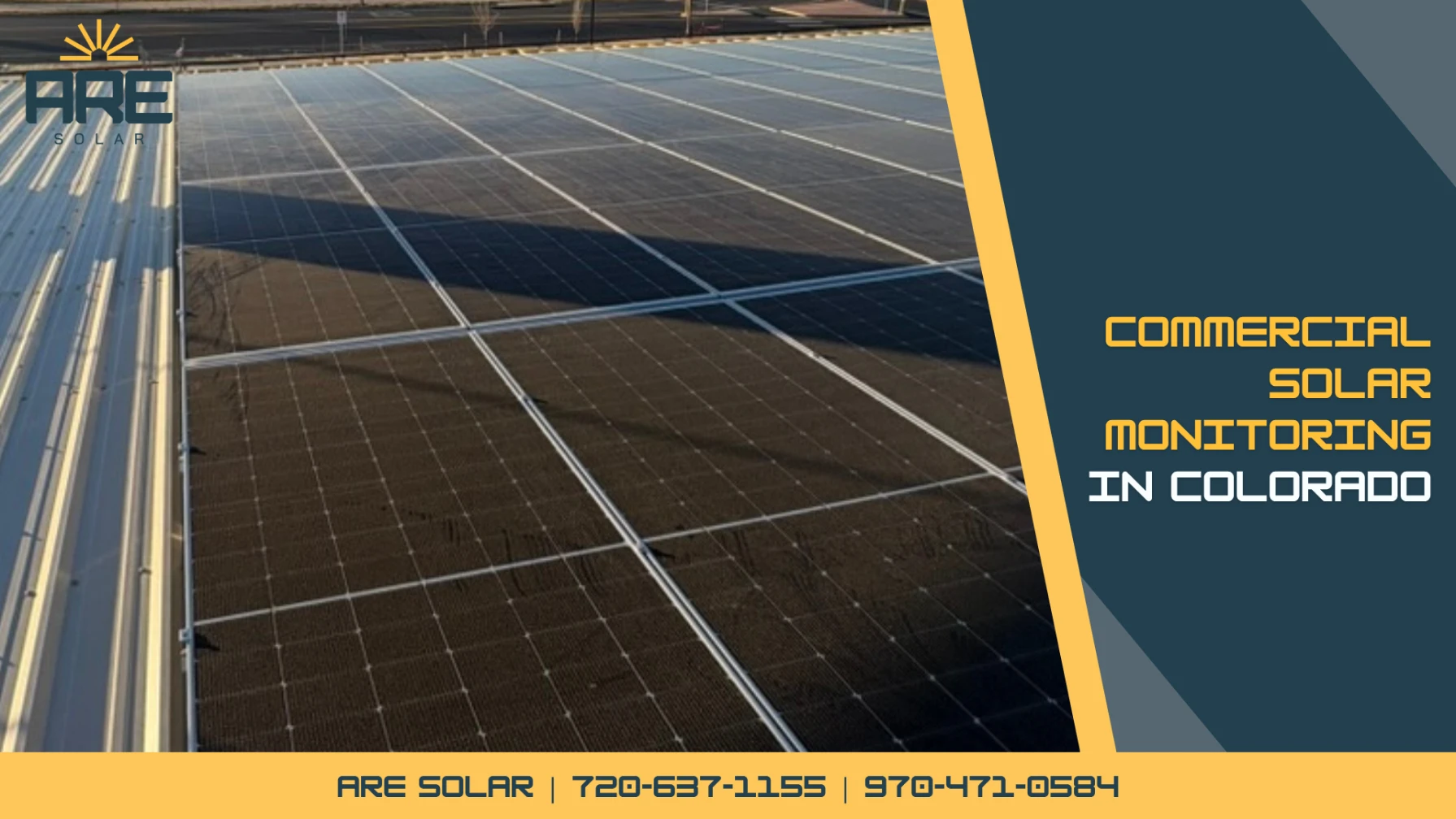
Commercial solar monitoring in Colorado turns operating data into early warnings. Those warnings can expose electrical faults, lost production, or failed communications. However, every alert does not mean equipment has failed.
Some notifications reflect normal responses to snow, storms, or utility disturbances. Others identify conditions requiring immediate professional attention. The difference depends on timing, repetition, and affected equipment.
Colorado adds several variables to that interpretation. Snow can cover one array section while another remains exposed. Hail can cause damage that is not always obvious from a visual check of module glass. Wildfire-related grid disruptions can also trigger inverter shutdown messages.
A useful solar monitoring system provides more than daily production totals. Depending on the equipment and monitoring platform, it can show inverter status, string behavior, grid conditions, and communication health. That context separates a passing event from a consequential failure.
What Do Commercial Solar Monitoring Alerts Actually Report?
Common alerts can be grouped into categories such as these.
| Alert category | What it usually indicates | Recommended response |
| Communication loss | The monitoring platform stopped receiving data | Check network status before assuming production stopped |
| Grid fault | Utility voltage or frequency moved outside permitted limits | Compare the alert with known utility outages |
| Low production | Actual output fell below expected output | Review weather, snow cover, shading, and inverter data |
| Isolation or ground fault | System may have detected an unintended electrical path to ground or reduced insulation resistance | Stop remote resets and contact a qualified technician |
| Equipment temperature | An inverter or electrical component became too hot | Check for obvious external ventilation obstructions and have persistent temperature alerts evaluated by qualified personnel. |
Alert names vary between manufacturers. The underlying electrical conditions remain more consistent.
A “site offline” message often describes a data problem. The solar array may still be producing normally. Internet service, cellular connections, gateways, and network switches can all interrupt reporting.
That distinction matters for commercial properties. A disconnected dashboard can temporarily prevent operators from seeing current production data, even when generation continues. It can also create unnecessary concern when generation never stopped.
Colorado Weather Leaves Recognizable Data Patterns
Colorado conditions create production patterns that can resemble equipment problems. Good solar troubleshooting begins by matching data against site conditions.
Snow usually causes a broad production decline across covered array sections. Output may recover unevenly as wind and sunlight clear different roof areas. That stair-step recovery can be normal.
A failed string looks different. Its production may remain low after nearby strings recover. That persistent separation deserves investigation.
Hail requires another type of review. Visible module glass may remain intact after a storm.
Strong winds can also expose weaknesses in cable management or damaged insulation. Those conditions may contribute to intermittent isolation warnings.
SMA technical guidance notes that rain, dew, and wind can expose damaged insulation. The company recommends inspection by qualified personnel after isolation or residual-current events. These conditions should not be cleared through repeated resets.
When Is a Grid Alert Really a Solar Problem?
Inverters continuously measure utility voltage and frequency. They disconnect when those values leave approved operating limits.
These protective functions help maintain safe, code-compliant operation. They prevent the inverter from continuing normal grid-connected operation under unacceptable utility conditions.
A grid alert does not automatically identify inverter failure. It may follow a utility outage, voltage disturbance, or protective grid action. The alert should be compared against utility records first.
This became particularly relevant during Colorado’s 2026 wildfire-risk periods. This is when Xcel Energy activated Enhanced Powerline Safety Settings (EPSS) in parts of the state.
Under EPSS, power lines remain energized but operate with more sensitive protection settings. If a problem is detected, power can shut off and remain off until crews visually inspect affected lines and determine that service can safely be restored. A commercial solar inverter may therefore report a grid-related event even when the solar equipment itself is operating as designed.
Xcel Energy’s April 2026 notice also warned that restoration could require physical line inspections. Commercial arrays may show repeated grid events during those periods. The inverter is responding to the utility connection, not creating the outage.
Repeated grid alerts without a documented outage require deeper review. Voltage at the service, transformer loading, and inverter settings may need testing. A licensed master electrician should perform that work.
Commercial Solar Monitoring in Colorado Needs a Site Baseline
A dashboard becomes useful after someone establishes normal site behavior. Raw production numbers alone provide limited context.
The baseline should account for array direction and inverter capacity. It should also include seasonal weather and operating schedules.
An Erie warehouse needs different expectations than a mountain installation exposed to different weather and irradiance conditions.
Performance comparisons should use similar weather periods whenever possible. Yesterday’s output means little when yesterday had different irradiance. Month-over-month totals can hide shorter equipment failures.
The stronger method compares matching equipment during the same interval. Two similarly configured inverters serving comparable array sections should generally follow similar production patterns under the same weather conditions. A widening gap creates a clearer diagnostic signal.
Useful solar system alerts should therefore include persistence thresholds. One brief communication gap may not require a truck roll. A silent inverter during peak production does.
Which Alerts Require Immediate Attention?
Isolation, ground-fault, and repeated unexplained shutdown warnings warrant prompt professional review. These alerts can involve dangerous electrical conditions.
Do not open inverter cabinets or rooftop electrical enclosures. Do not repeatedly restart equipment without identifying the cause. A reset can erase useful diagnostic context.
Certain production alerts also deserve faster escalation. Act when an entire inverter stops during clear daylight. Act when one string remains down after snow clears. Act when alerts begin immediately after hail, roof work, or electrical service work.
Record the alert code and exact timestamp. Save dashboard screenshots before data changes. Note recent weather, outages, and work performed near the array.
That information shortens solar troubleshooting. It also helps technicians reproduce intermittent problems under matching conditions.
Monitoring Is Now an Information-Security Issue
Modern commercial monitoring depends on internet-connected gateways and inverters. That connectivity creates another maintenance responsibility.
The U.S. Department of Energy solar cybersecurity guidance identifies distributed solar as a cyber-physical system. A digital compromise can disrupt information and physical equipment controls.
DOE recommends building capabilities to prevent, identify, detect, respond to, and recover from cyber incidents involving distributed energy resources.
For commercial properties, remove former employees’ access and replace default credentials. Enable multifactor authentication and manage vendor access.
Firmware updates need a documented approval process. Vendor access should also have a named owner. Internet-connected solar monitoring equipment should be included in the property’s cybersecurity and access-management practices.
Frequently Asked Questions
Can a commercial array produce power while showing “offline”?
Yes, if “offline” refers to the monitoring connection rather than the inverter itself. A gateway can lose internet or cellular connectivity while the solar equipment continues producing. Confirm the equipment status and alert details before assuming production has stopped.
Should businesses clear every alert remotely?
No. Communication notices may clear after network service returns. Electrical, isolation, or ground-fault warnings need qualified inspection.
How often should someone review solar system alerts?
Critical alerts should route immediately to a responsible contact. Performance trends should receive regular review against weather and expected production.
Can monitoring confirm hail damage?
Monitoring can reveal abnormal production after a storm. It cannot confirm every form of physical damage. Rooftop inspection and electrical testing may still be necessary.
Know What Your Array Is Telling You
Not sure whether an alert points to a communications issue, a grid event, or a problem that deserves a closer look? Bring ARE Solar the alert code, timestamp, and available monitoring data. Our team can help put the warning in context and determine the appropriate next step. For commercial solar monitoring in Colorado, the goal isn’t to clear every notification. It’s to know which ones matter before lost production or an electrical problem goes unnoticed.