Sizing a commercial battery starts with the building, not the battery. Commercial battery storage in Broomfield, CO has to match one job first. Then it has to match the hours that job demands.
Too small, and the battery runs out before the job is done. Too large, and capital sits idle in a cabinet. Both mistakes are expensive.
ARE Solar sizes storage from measured load data, not product brochures. We design, permit, install, inspect, and turn on every battery we install.
This guide walks through the sizing method we use. It also covers what Broomfield adds to the math.
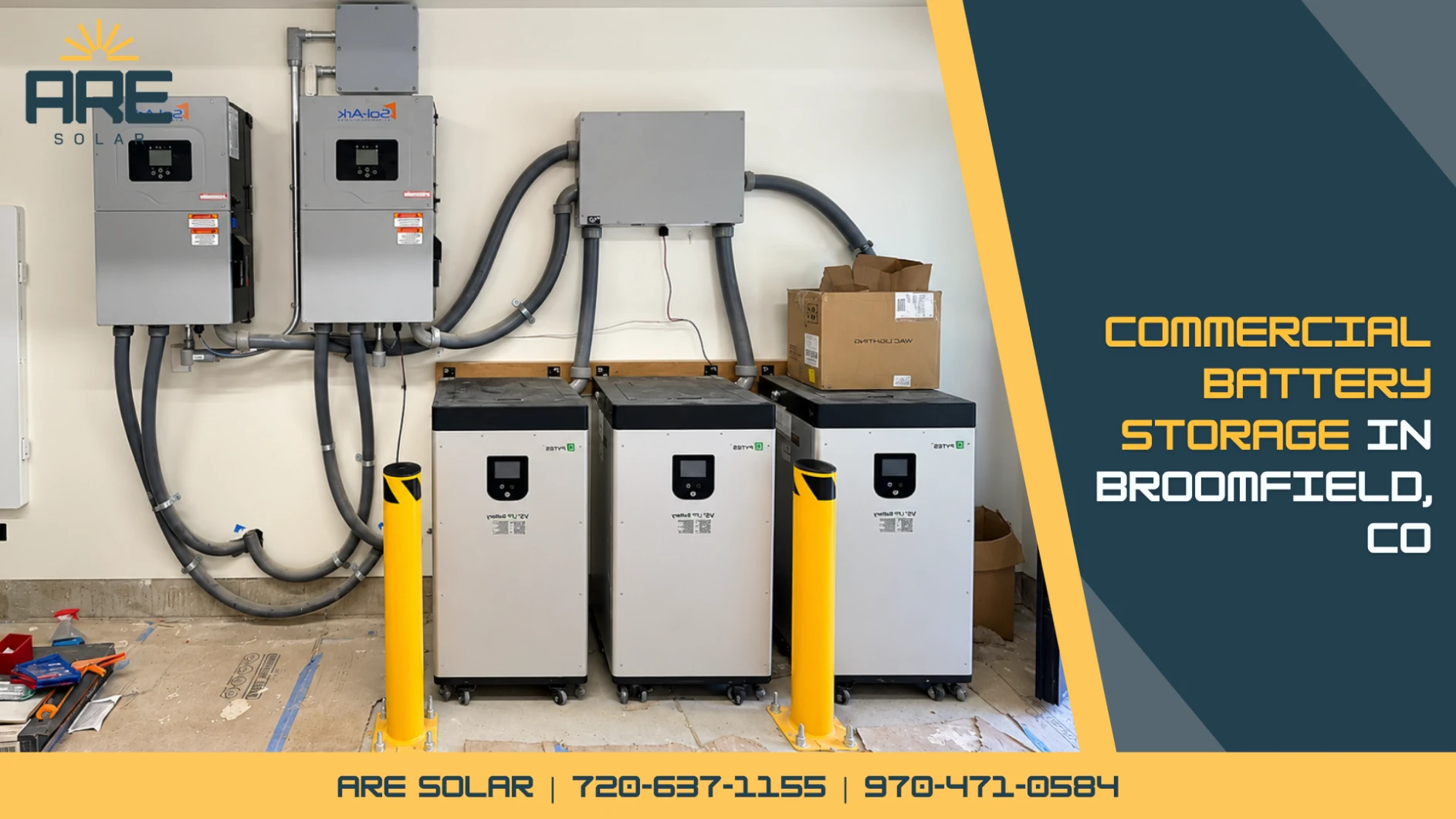
Step 1: What Job Is the Battery For?
Every commercial battery needs a primary job. Most fall into three groups: cutting demand charges, carrying critical loads through outages, or storing midday solar for later. Each job sizes differently.
A demand-charge battery needs enough power for short peaks. A backup battery needs enough energy for long hours. Our guide to cutting peak demand charges covers the first job in depth.
One battery can support more than one objective. Those objectives compete for the same power and stored energy. Energy held in reserve for an outage cannot also shave a peak.
Step 2: Which Loads Must Stay On?
For backup, start with a critical-load list, not the whole building. Walk the facility and name each load that cannot go dark.
- Refrigeration and freezers
- Servers, network, and phone systems
- Security, access control, and alarms
- Lighting for occupied work areas
- Process equipment that cannot stop mid-cycle
Record each load’s running kW and how many hours it must run. Motors and compressors also draw a short surge when they start. The inverter must handle that surge, or the backup trips.
Step 3: How Do Hours Become Kilowatt-Hours?
The core math is simple. Energy needed equals critical load times hours of coverage.
Here is a hypothetical example. A Broomfield warehouse has 40 kW of critical load. It wants four hours of coverage. That is 160 kWh of energy delivered to the loads. This is before accounting for system losses, usable state-of-charge limits, battery degradation, temperature effects, and design reserve.
That number is a floor, not a final size. The battery’s nameplate must be larger, for reasons covered in Step 4.
Four hours is a common reference point, not a rule.The National Laboratory of the Rockies (formerly NREL) publishes a commercial battery benchmark. It models durations from one to eight hours. The correct duration depends on the site’s loads, tariff, resilience target, and operating strategy.
Step 4: How Do Losses and Aging Change the Size?
Batteries lose some energy in every charge and discharge cycle. NLR’s 2025 Annual Technology Baseline uses 85% round-trip efficiency as a representative modeling assumption. Actual efficiency varies by battery chemistry, inverter architecture, operating point, temperature, and auxiliary loads.
Capacity also fades with use. NLR’s benchmark assumes a 15-year life, with costs set aside to offset that degradation. Plan for end-of-life performance, not only day-one capacity.
A battery that barely covers 160 kWh on day one will fall short later. Ask any installer how they planned for that gap.
What Does Broomfield Add to the Math?
Broomfield businesses have a recent example of how quickly outage plans can become relevant. Xcel Energy planned a Public Safety Power Shutoff for December 17, 2025. The notice listed Broomfield among nine counties that could be affected.
Xcel said restoration could take several hours to several days. As forecasts were refined, Xcel limited the shutoff to five counties. They were Boulder, Clear Creek, Jefferson, Larimer, and Weld. Crews had to inspect 678 miles of line before restoring power. Broomfield was not shut off, but the event shows why businesses here should plan for outages.
Four hours of coverage and two days of coverage are very different batteries.
For longer outages, solar can help extend battery runtime. The system must be designed for islanded operation so it can safely recharge the battery while the grid is down. That takes deliberate design.
Broomfield is a consolidated city and county. Local building permitting is handled through the City and County of Broomfield Building Division.
Broomfield adopted the 2024 International Codes, including the 2024 International Fire Code, effective April 15, 2026. It also adopted Colorado’s Low Energy and Carbon Code. Broomfield’s code adopts the electrical code edition in effect statewide. Colorado moved to the 2026 National Electrical Code on August 1, 2026. Commercial battery-storage projects should be designed against the current locally adopted requirements, including applicable fire, electrical, structural, and energy-storage provisions.
Placement matters too. Batteries perform best within the manufacturer’s temperature range. An outdoor cabinet on a Front Range roof sees summer heat and winter cold. Indoor rooms need clearances, ventilation, and fire-code review.
Step 5: Why Model It Before You Buy?
Sizing by hand gets you close. Modeling gets you closer. DOE describes NREL’s REopt platform as a no-cost, online tool for this work.
REopt weighs storage, solar, and other technologies against a site’s cost and resilience goals. It can start with as few as three site inputs. We pair that kind of model with measured interval data from the building.
What Should Businesses Ask Before Signing?
Ask these questions before approving a battery proposal:
- Which job is the battery sized for, and for how many hours?
- What is the usable capacity, not just the nameplate?
- How does the design account for capacity fade over time?
- Is the proposed energy storage system listed and labeled to UL 9540 where required by the applicable code?
- Who handles permits, inspection, and turning the system on?
If an answer stays vague, keep asking.
Frequently Asked Questions
Is a four-hour battery the standard size?
It is a common reference point, not a requirement. NREL’s benchmark models one to eight hours. The right duration comes from your critical loads and outage goals.
Can one battery handle demand charges and backup?
Yes, with tradeoffs. Energy reserved for outages is not available for shaving peaks. The control settings decide how that split works.
What data should I gather before a sizing review?
Gather 12 months of utility bills and interval data if available. Add a list of critical loads with their kW and required hours.
Does a battery lose capacity over time?
Yes. Capacity fades with use and age. NREL’s benchmark assumes a 15-year life with costs set aside for degradation.
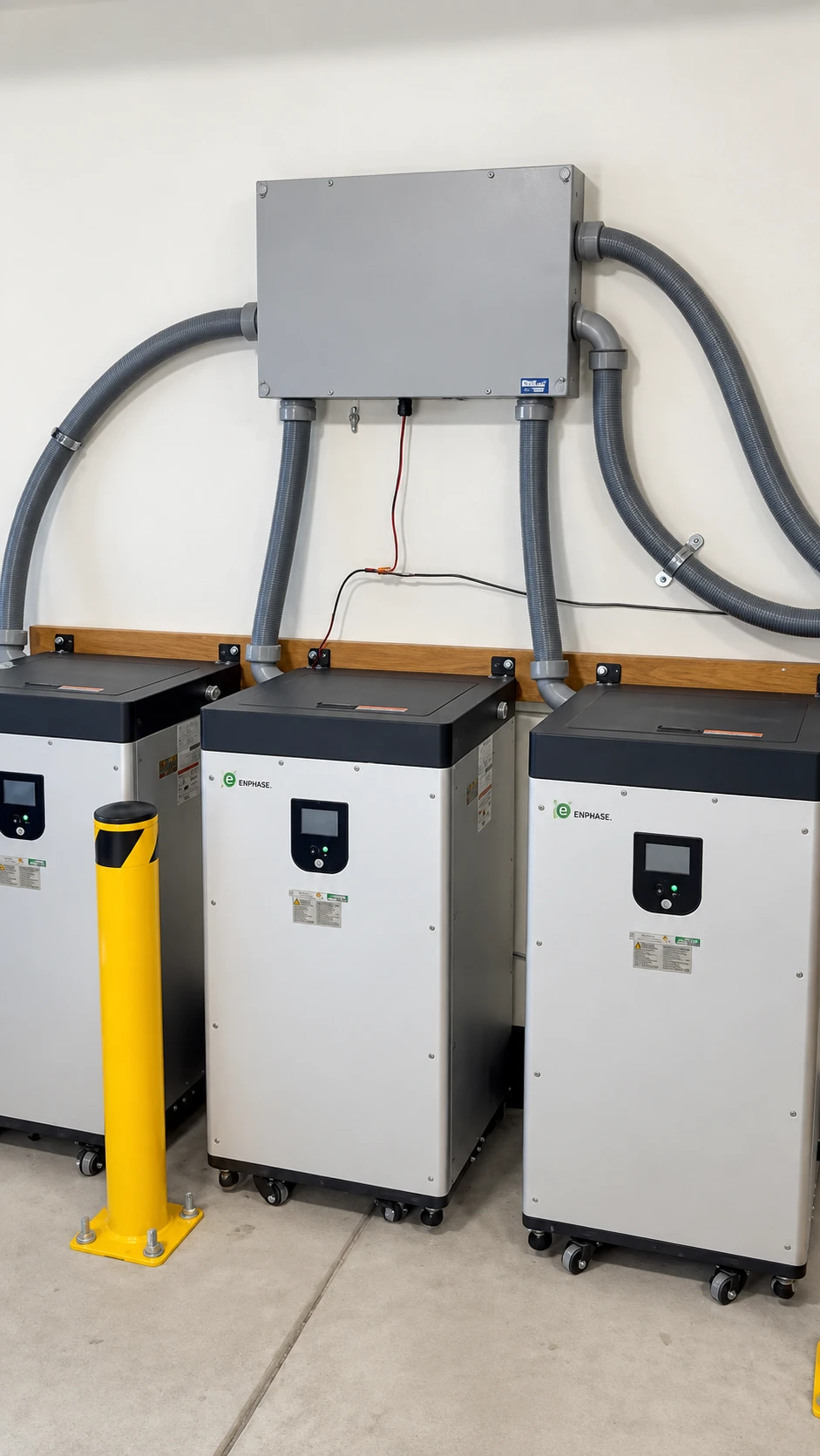
Plan Commercial Battery Storage in Broomfield, CO With ARE Solar
A battery system should answer a business need before it answers a technology question.
ARE Solar helps Colorado businesses understand what storage can do, where it fits, and how to design it correctly.
If your facility is exploring commercial battery storage in Broomfield, CO, contact ARE Solar for an evaluation. We will size the battery for its job, its hours, and end-of-life performance.