Your panels can sit in full Colorado sun and produce nothing usable. The inverter is a critical part of that path, converting the array’s DC electricity into AC electricity. However, inverter-looking problems can also begin with grid conditions, wiring, disconnects, breakers, communications, or other system components.
Solar inverter repair in Castle Rock starts by identifying the actual failure. A blank screen or repeated code may point toward the inverter. A dead monitoring connection can imitate the same problem. Grid voltage, damaged wiring, or a tripped breaker can also stop production.
Repair makes sense when testing isolates a correctable fault. That could involve communications, configuration, ventilation, or an external electrical connection. Replacement makes sense when internal electronics fail repeatedly. It also makes sense when parts, support, or compatible repairs no longer exist.
Age matters, but age does not decide. Evidence does.
Record the complete error code and timestamp. Save monitoring screenshots and recent production data. Then have a qualified solar electrician test the system.
Do not keep resetting the same fault. That can obscure the pattern without addressing the cause.
Start With What the System Is Actually Doing
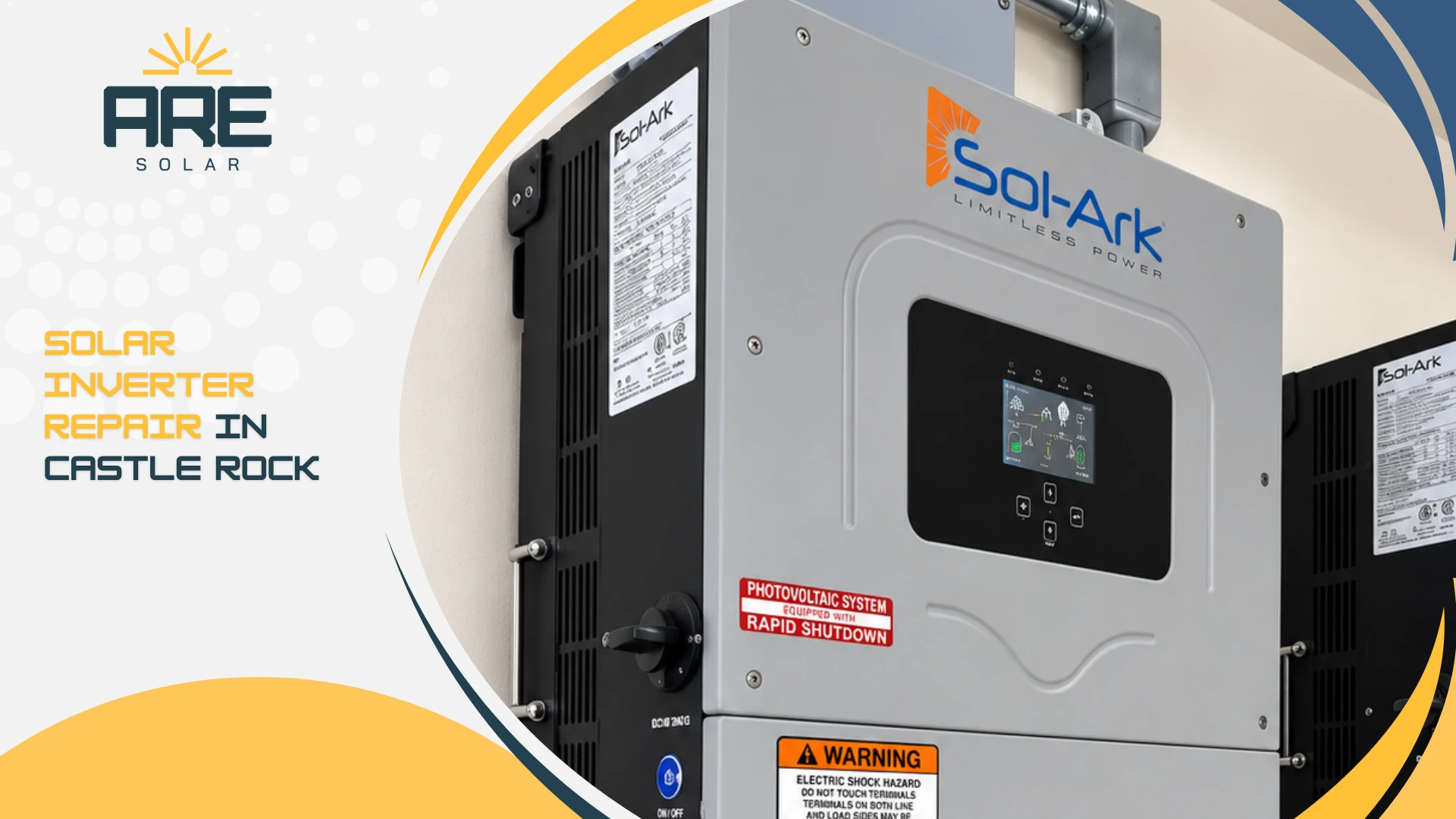
An inverter converts the array’s direct current into usable alternating current. Depending on the model, modern inverters may monitor grid voltage, frequency, isolation, temperature, and system communications.
Architecture changes the symptom. A failed string inverter can silence the entire array. One failed microinverter may remove only one module. That difference changes the repair scope.
That gives one box several ways to report trouble. It also means the first visible symptom can mislead you.
A system showing no monitoring data may still produce electricity. A communicating inverter may still report zero production. One is often a data problem. The other may be electrical.
Check production against a comparable sunny day. Castle Rock cloud cover and snow can change output sharply. Compare similar conditions before declaring equipment dead.
Then look for a clear break in the pattern. Did production stop across the entire array? Did it return after grid power stabilized? Does the same fault appear at the same time daily?
Patterns shorten the diagnostic path. Guessing lengthens it.
When Does Solar Inverter Repair in Castle Rock Make Sense?
Repair remains reasonable when the inverter itself is still serviceable. The exact option depends on its design, warranty, fault, and available components.
Communication failures are one example. A failed internet connection can make the monitoring portal go dark. It does not prove the inverter stopped converting power.
Temperature faults need the same discipline. Blocked airflow, direct heat, debris, or a failed cooling component may trigger shutdowns. Testing must separate the condition from internal damage.
Grid-related faults can originate outside the inverter. Voltage or frequency outside permitted ranges can force a protective shutdown. Replacing the inverter would not correct the utility condition.
Ground or isolation faults require electrical testing. The problem may sit in conductors, connectors, optimizers, or moisture-damaged equipment. The Department of Energy recommends electrical inspection after inverter tripping.
Cycling power is not diagnosis. The fault will return if the cause remains.
When Is Replacement the Better Answer?
Replacement becomes stronger when the failure lives inside obsolete power electronics. Repeated internal faults matter. So do unavailable parts and discontinued technical support.
Physical damage can make professional evaluation urgent. Burned terminals, water intrusion, melted insulation, smoke, or a damaged enclosure can indicate an electrical or fire hazard. Move away from visibly damaged equipment.
Warranty status changes the decision too. Some manufacturers issue replacement units through their warranty process. Others require diagnostic records before authorizing an equipment return.
Compatibility matters beyond the inverter label. The replacement must work with array voltage, optimizers, batteries, monitoring, rapid shutdown, and utility requirements. A similar power rating does not prove compatibility.
Replacement can also expose older system problems. Undersized conductors, damaged disconnects, failed labels, or unsupported communications may need correction. We test the connected system before commissioning the new inverter.
The goal is not hanging a newer box. The goal is returning the complete system to verified production.
What Can a Castle Rock Homeowner Check Safely?
Start with the monitoring portal and current utility status. Photograph the full error message. Record when production changed and what weather came before it.
Observe indicator lights or the display without opening any cover. Manufacturer instructions explain what each light means. Follow the manual for your exact model.
Look from ground level for obvious storm damage. Hail, wind, drifting snow, and rapid temperature can expose or contribute to problems in outdoor system components. Watch for broken glass, hanging conduit, shifted hardware, or animal activity.
Do not remove inverter covers or probe electrical terminals. SolarEdge’s owner guidance directs homeowners toward a qualified installer or electrician. Other manufacturers publish similar safety limits.
Burning odors, arcing sounds, smoke, or exposed conductors change the response. Keep people away and contact emergency services when immediate danger exists.
Safe observation helps us. Electrical experimentation does not.
Castle Rock Conditions Change the Diagnostic
Castle Rock sits where Front Range weather can turn quickly. Strong sun can heat exterior equipment. Hail and wind can damage components upstream from the inverter.
That is why solar repair in Castle Rock cannot stop at reading one code. We test voltage, current, insulation resistance, communications, and connected equipment. The first alert starts the investigation. It does not finish it.
Local rules matter during replacement. Castle Rock’s current adopted building codes include the 2024 International Codes and 2026 National Electrical Code. The applicable requirements depend on the scope of the replacement work.
An inverter replacement should therefore be reviewed against the permit requirements that apply to the actual scope of work. Changes to inverters, electrical configuration, rapid-shutdown equipment, batteries, or other components may require updated documentation or utility coordination.
For CORE-served properties, the current interconnection procedures govern approved equipment configurations. The CORE Generation Interconnections page also provides the current procedures and related resources. We check the property, utility, and replacement scope before work begins.
Skipping that review can leave a working inverter attached to an incomplete project. We finish the whole job.
Frequently Asked Questions
Does Zero Production Always Mean the Inverter Failed?
No. Utility outages, grid conditions, wiring faults, snow, and monitoring failures can look similar. Testing identifies where production actually stopped.
Can an Inverter Error Clear by Itself?
Some grid-related errors clear after utility service stabilizes. Repeated isolation, temperature, or internal errors still need diagnosis. Save the code before it disappears.
Should I Reset a Tripped Solar Breaker?
Do not repeatedly reset it. A trip indicates a condition requiring investigation. Repeated resetting can obscure a recurring fault pattern and increase risk.
Can an Older Inverter Work With a New Battery?
Sometimes, but compatibility is specific. Inverter model, battery controls, voltage, communications, and backup architecture must align. Test the complete design before buying equipment.
Put the Evidence in Front of Us
Solar inverter repair in Castle Rock should end with a clear finding. You should know what failed, what likely caused it, and what the next step requires.
Send us your error code, monitoring screenshots, equipment model, and recent utility bill. We will separate the symptom from the failure. Then we will tell you plainly whether repair or replacement makes sense.
Contact us for solar repair in Castle Rock. The job is not finished when the error disappears. The system should be tested and its normal operation verified before the repair is considered complete.