Commercial solar demand charges in Douglas County depend first on who sends the bill. There is no single countywide formula. CORE Electric Cooperative, Xcel Energy, and Mountain View Electric Association all serve parts of the county. Each one measures commercial demand its own way.
That makes timing as important as total production. A warehouse may peak at 1:30 p.m., while the array runs hard. A restaurant may peak at 6:30 p.m., after output falls off. A water-pumping station can follow a schedule all its own.
So the first question isn’t how many panels fit on the roof. It’s when the meter gets expensive. ARE Solar starts there, because that answer shapes every design decision after it.
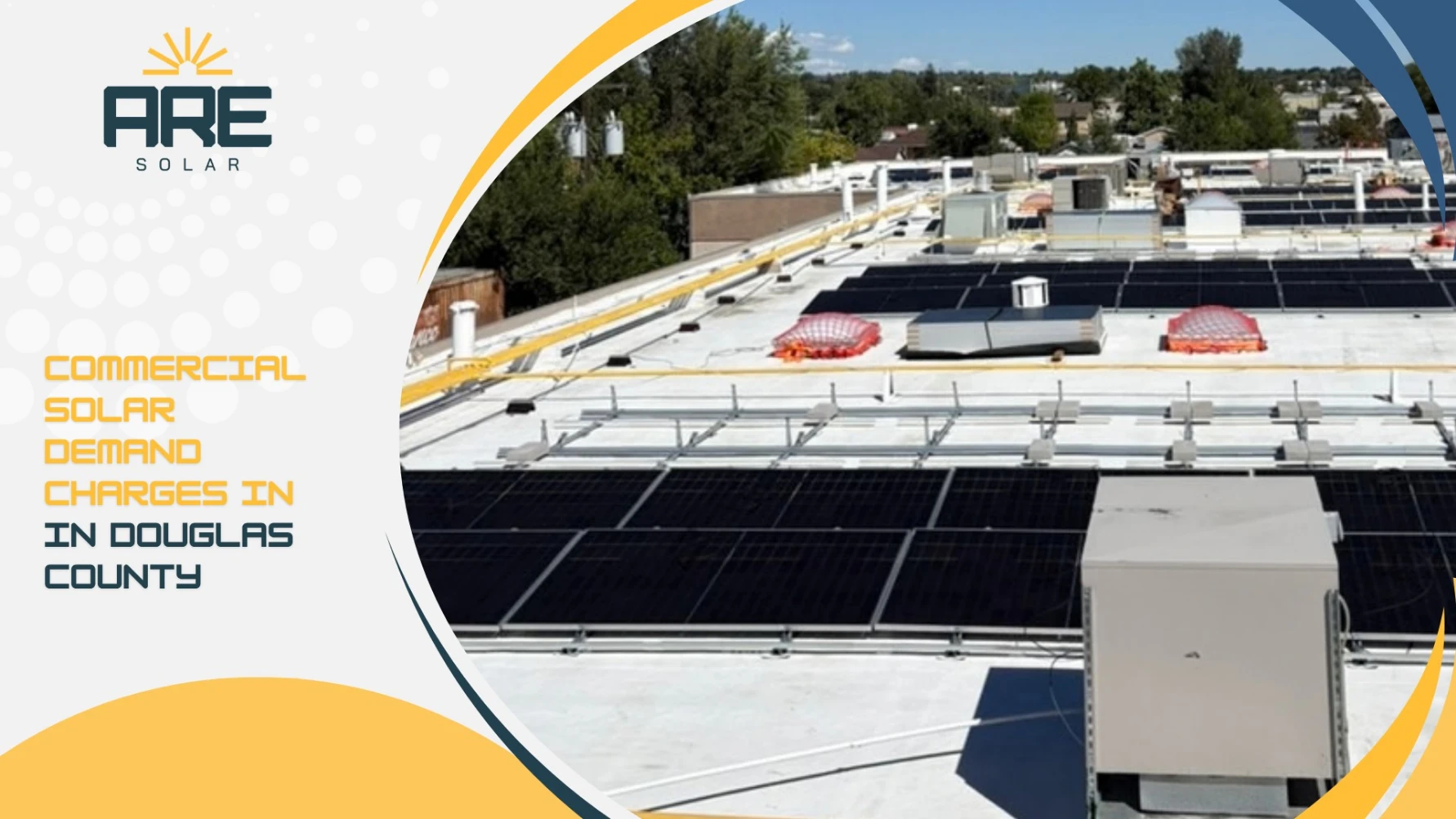
What Are Commercial Solar Demand Charges in Douglas County?
Your bill measures two different things. Kilowatt-hours track how much energy the building uses over the month. Kilowatts measure how much power the building draws during a defined interval. Demand charges bill for that moment.
For most non-residential members, CORE sets demand from the highest 15-minute period in the billing cycle. The dollar rate then depends on the rate schedule. CORE explains the method on its demand charge page.
Fifteen minutes is a short window. Two rooftop units and a compressor starting together can set it. A single 15-minute interval can establish one of the demand components that affects the month’s bill.
One County Can Produce Three Different Solar Answers
Location inside Douglas County decides which rules apply before sizing starts. Sometimes the answer changes within a single town.
Lone Tree lists Xcel Energy for electricity and gas. Castle Pines splits between CORE and Xcel, which serves its Hidden Pointe neighborhood. Mountain View Electric Association lists Douglas among the eight counties it serves.
The roof sees the same Colorado sun either way. The bill does not. Two buildings with identical arrays can earn very different demand savings. That’s why commercial electricity demand charges in Douglas County need site-specific modeling. A countywide average can’t answer the question.
How CORE, Xcel, and MVEA Bill Demand
CORE Electric Cooperative
CORE updated rates in 2026, including commercial rate schedules effective September 1. Most CORE business accounts sit on Small General Service or Large Power Service. Large Power Service covers buildings needing more than 50 kVA of transformer capacity. It bills $17.50 per kW on the highest 15-minute interval of the month. CORE’s largest accounts, at 2,000 kW and up, move to coincident peak schedules.
The Coincident Peak Distribution schedule shows how layered that billing can get. It bills three separate demand charges. Basic demand runs $9.70 per kW, and coincident peak demand runs $7.66. Generation demand is the largest, at $16.90 per kW.
That schedule also carries a ratchet. Basic billing demand can’t fall below 50% of the highest basic demand billed in the prior 12 months. On these large-account schedules, half of one bad peak can linger for a year.
Xcel Energy
Xcel’s commercial rate structures can include separate distribution and generation/transmission demand components. Some charges vary by season and rate class. The applicable tariff depends on the property’s service characteristics. Current rates live in Xcel’s rate books.
Mountain View Electric Association
MVEA is changing its commercial rates with its October 2026 rate update. Large Power members get a new time-of-day demand charge. It’s set by the highest 15-minute period from 5 p.m. to 9 p.m., Monday through Friday. The existing anytime demand charge stays, at a reduced amount.
MVEA’s Small Power accounts work differently. Their demand charge uses the single highest one-hour period on weekdays. Members can switch to a Small Power Time-of-Day Rate instead, once every 12 months. The new options start with October use on November bills. Water pumping accounts also get a 5 p.m. to 9 p.m. weekday demand window.
When Does Solar Actually Lower Demand Charges?
Solar lowers demand only when production overlaps the measured peak.
Picture a distribution facility peaking around 1:30 p.m. in July. Cooling, conveyors, and dock equipment all run together. The array is near full output, so grid draw drops during that interval.
Now move the peak to 6:30 p.m. In summer, the array still produces, but output is falling fast. By 6:30 p.m. in December, a conventional rooftop PV array would no longer be producing meaningful solar power.
To be real, solar alone can’t reliably cover MVEA’s evening window in winter. Summer production may overlap the early portion of that window, particularly with west-oriented modules. The winter overlap is much more limited.
That doesn’t make solar the wrong investment. It means the design has to be modeled against the actual tariff. Storage, controls, or schedule changes may need to carry the evening hours.
The Best Annual Production May Not Create the Best Peak Reduction
Commercial design usually starts with annual energy production. Demand charges add a second target: timing.
South-facing modules emphasize midday output. West-facing sections shift more production into the late afternoon. For a building that peaks near 4:30 p.m., that shift can carry real value. For a building that peaks at noon, south-facing production may line up on its own.
We don’t shift an array blindly for demand savings. Roof geometry, shading, setbacks, drainage, and structural loading still set the limits. The load curve has to justify the choice. The highest-producing layout and the strongest demand-reduction layout aren’t always the same. That’s a design decision, made with data.
A Demand Spike Can Be an Operations Problem
Not every high demand charge needs more equipment. Sometimes several loads simply start together. Compressors, rooftop units, and process equipment cycling inside one interval can set a sharp peak.
CORE’s own demand charge guidance points at this. It suggests cooling one area at a time and running one rooftop unit at a time. Some businesses can stagger startups. A commercial kitchen or production line may not have that freedom.
So we identify the cause first. Solar may handle part of the peak. Controls or scheduling may handle another part. Storage can make sense when the peak lands after sunset. Sometimes a changed startup sequence does the cheapest work.
Future Loads Belong in Today’s Solar Model
Last year’s bills show the building that was. Your plans show the building that’s coming.
A business adding six EV chargers may see them plug in together at shift change. Heat pumps move heating load from gas to electric. New compressors, refrigeration, or a production line can reshape the curve. A second shift can push the peak into the evening.
Under MVEA’s new evening window, that last change matters even more. We design around the building being planned, not only the one on last year’s bills.
Why Interval Data Matters More Than Monthly Totals
A monthly bill compresses thousands of operating decisions into one page. Interval data shows what happened underneath. It reveals startup events, charging periods, seasonal swings, and shift changes.
Consider two businesses. One uses a lot of energy, spread steadily across the day. The other uses less, but one sharp 15-minute spike sets its demand. Monthly kilowatt-hours would never show that difference. Interval data will, before anything gets built. It can also keep an array from being oversized for a problem it can’t solve.
Colorado Conditions Still Shape the Build
The tariff sets the economics. Colorado conditions set the physical project. Summer cooling pushes afternoon peaks higher. Winter electric heating can move demand into dark hours.
Codes differ across the county, too. Unincorporated Douglas County stays on the 2023 NEC until January 1, 2027. Structural review still covers snow load, wind load, and roof attachments.
Frequently Asked Questions
Does solar eliminate commercial demand charges?
Usually not completely.
Solar can reduce demand when production overlaps the measured peak. Demand occurring outside solar hours can remain.
Are commercial electricity demand charges in Douglas County the same everywhere?
No.
Douglas County includes CORE, Xcel Energy, and Mountain View Electric territories. Their commercial rate structures are different.
Can batteries help with evening demand peaks?
Potentially.
A battery can discharge when solar production falls. The economics depend on tariff rules, battery size, and actual interval data.
Should EV chargers be included before sizing commercial solar?
Yes.
New chargers can materially change peak demand and daily load shape. Planned charging schedules belong in the model.
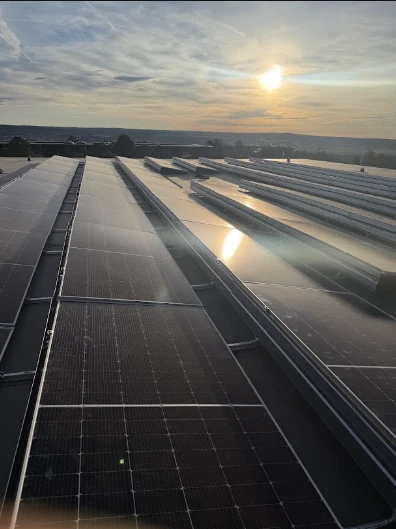
Bring Us the Peak Before We Fill the Roof
Commercial solar demand charges in Douglas County can’t be solved from annual usage alone. An unexamined demand charge gets paid again every month. For an owner responsible for the numbers, that’s a consequential cost to leave alone.
Send ARE Solar twelve months of bills, your interval data, operating schedules, and planned upgrades. We’ll map those loads against modeled production. You’ll see which peaks solar can reach and which ones it can’t.