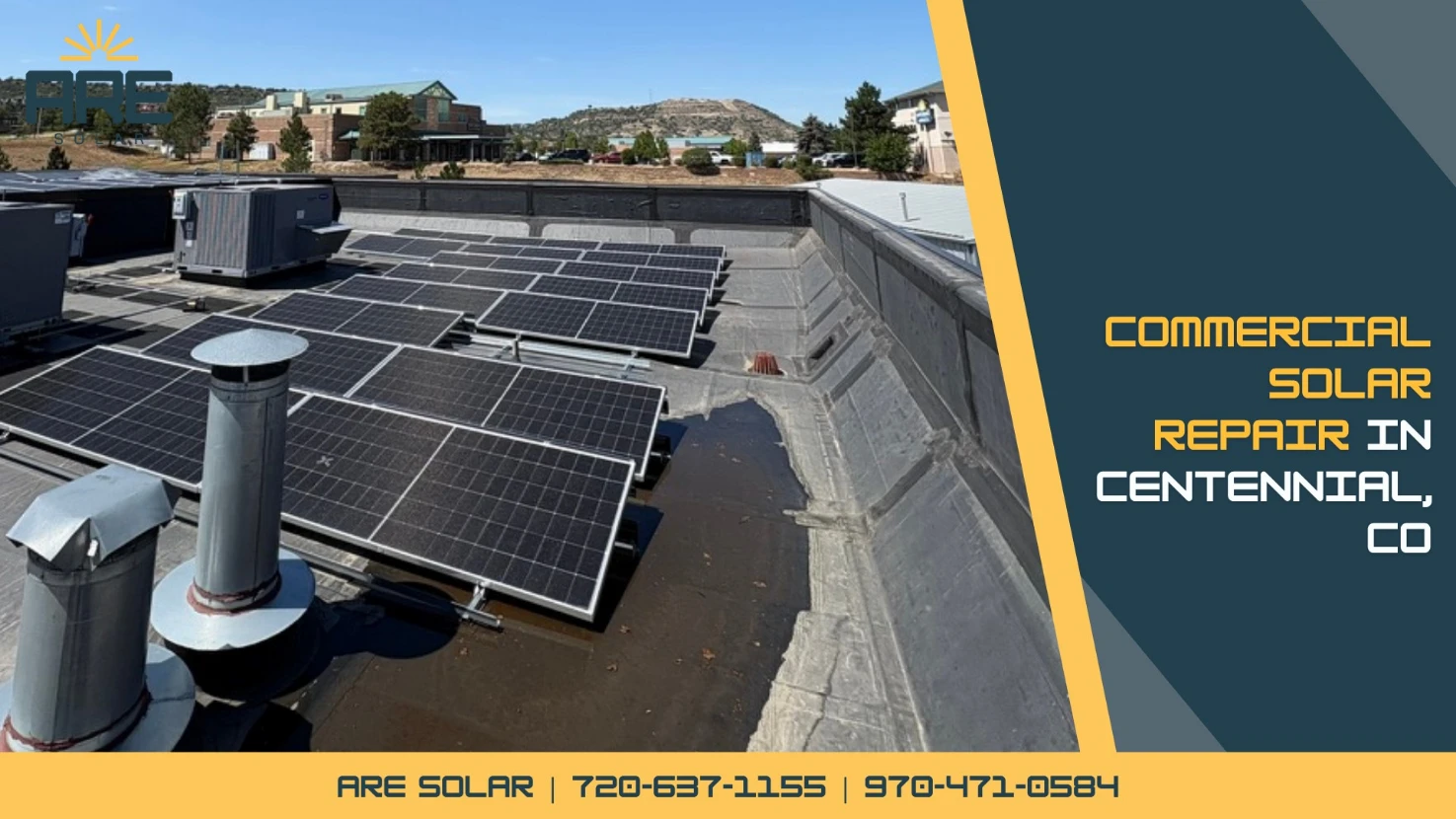
Commercial solar repair in Centennial, CO starts by confirming what actually stopped. A blank monitoring screen does not always mean the array stopped producing. The monitoring gateway may have lost internet while the inverter kept operating.
True zero production usually points elsewhere. The inverter may detect unsafe grid voltage, a ground fault, failed AC power, or an open disconnect. That distinction changes diagnosis, safety controls, and production losses. Snow, hail, moisture, and loose wiring add other possibilities under Colorado conditions.
A reset can clear the code that explains the fault. The U.S. Department of Energy’s PV maintenance guidance recommends an electrical inspection after inverter nuisance tripping, including ground-fault checks. A restart alone rarely identifies the cause.
Start with timestamps, not guesses. Save the inverter code, monitoring graph, recent utility outages, and site changes. ARE Solar uses those details to turn commercial solar troubleshooting into a traceable diagnosis.
What Does Zero Production Actually Mean?
Solar modules create direct-current electricity in daylight. The inverter converts it to alternating current for the building. It also watches utility voltage and frequency continuously. When those leave safe limits, the inverter shuts down by design.
So a bright day does not guarantee usable production. The modules may be energized while the inverter correctly refuses grid connection.
A flat monitoring graph can also mean a communications failure. Compare inverter status, the production meter, and the monitoring portal before declaring an outage. Disagreement between them narrows the fault considerably.
Build the Failure Timeline
Good commercial solar troubleshooting begins with the last normal production interval. Identify the exact date and time when output changed. Then compare that moment with building and weather records.
Did a utility outage or hailstorm occur that day? Did contractors move conduit or disconnect equipment?
Also check whether production fell suddenly or gradually. A sudden drop suggests tripping, communications loss, a failed string, or disconnected equipment. Gradual decline may indicate shading, soiling, degrading connections, or sensor drift.
Save screenshots before anyone clears an alarm. Record each inverter code exactly. Photograph disconnect positions from a safe distance without opening electrical equipment.
DOE guidance also says to archive monitoring passwords and essential files. Missing credentials can extend downtime even when the physical fault is small.
Why Did the Inverter Shut Down?
An inverter alarm is evidence, not a diagnosis. “Grid fault” may describe abnormal voltage or frequency at the connection point. It does not automatically prove the inverter failed.
Ground-fault warnings deserve immediate professional testing. Damaged insulation, moisture, pinched conductors, or failed connectors can create leakage paths. Repeated resets can erase the fault’s timing without fixing it.
String-level faults produce a different signature. One input may fall while neighboring inputs remain steady. A technician can compare currents, insulation resistance, connectors, fuses, and combiner equipment.
Commercial PV repair should follow measured evidence from AC and DC sides. Replacing the loudest component can leave the original fault untouched.
Centennial Conditions Leave Physical Clues
Centennial’s published solar checklist sets specific local design conditions. It lists a 115 mph design wind speed, Exposure C, and a 30 psf snow load. Those numbers also frame post-weather inspections.
Wind can loosen damaged components or move previously unsupported conductors. Snow can hide cracked glass, displaced clamps, and drainage problems. Hail damage may be difficult to see from the roof surface. Hail can crack solar cells without breaking the glass.
Thermal or infrared imaging can reveal hot connections and hidden damage. DOE’s hail guidance recommends IR, UV, or electroluminescence scans within a month.
Walking a commercial array to search for broken modules adds risk. Roof access, live DC circuits, and damaged glass create separate hazards. Secure the area and document visible conditions from safe locations.
Utility Records Shape Centennial Repairs
Xcel Energy and CORE Electric Cooperative both serve Centennial, depending on the address. The City’s property search tool shows which one serves your address. Confirm the serving utility before ordering replacement equipment. The approved one-line should identify meters, disconnects, inverters, protection, and connection points.
Xcel Energy’s current Standard for Electric Installation and Use covers repaired service equipment. Xcel won’t energize repaired wiring installations until set conditions are met. One condition is inspection release from the local authority. The standard counts storm-damaged meter sockets and masts as repairs.
CORE uses separate interconnection procedures for small and large generation systems. Its commercial net-metering threshold differs from residential. A changed inverter or protection scheme may need utility coordination.
To be real, compatible hardware is not always an approved substitution. Ratings, certifications, controls, and protective settings must match the system. Documentation should change when the physical system changes.
Centennial’s checklist requires a Colorado-licensed electrician for AC work. Colorado law limits PV electrical work to licensed electrical contractors and registered PV installers. Centennial also requires a separate fire department submittal for commercial solar. South Metro Fire Rescue serves Centennial. Confirm fire-permit needs with South Metro’s development and construction team before work begins.
What Happens During Commercial Solar Repair in Centennial, CO
ARE Solar starts with monitoring history and the approved design. A licensed master electrician verifies AC supply, disconnect status, inverter alarms, and production metering. DC testing follows when evidence points toward the array.
Commercial PV repair may require insulation-resistance testing, string-current comparisons, thermal imaging, or connector inspection. Results should identify the failed component and the reason it failed. That second answer prevents repeat outages.
Replacement work should finish with recommissioning. Each inverter, string, meter, and alarm must return to verified operation. The production curve should make physical sense under current sunlight.
Repairs Must End With Proof
A repaired system needs a new performance baseline. Compare production against weather, neighboring inverters, and the original design model.
DOE recommends two performance metrics: performance ratio and availability. Performance ratio compares actual output with modeled output. Availability is the share of time the system can deliver power. Acceptable values depend on design, site conditions, and contract terms. Compare results against the original model and the system’s own history.
Both metrics belong in the closeout record. Include replaced parts, test results, updated drawings, alarm settings, and restored monitoring access. Keep warranty and utility documents beside that record.
Solar system repair in Centennial should not end with “it turned on.” It should end with evidence showing stable production. We finish what we start.
Frequently Asked Questions
Can I reset a commercial solar inverter myself?
Repeated resets can clear or overwrite fault information. Save the code and contact a qualified technician. Ground faults and grid problems require testing before re-energizing.
Why is the monitoring portal blank on a sunny day?
The gateway may have lost internet or cellular service. The inverter and production meter can confirm whether generation continued. Do not assume the array failed from one screen.
Does a replacement inverter require new approval?
It depends on the equipment change and serving utility. Confirm permits, utility review, settings, and documentation before purchasing equipment. An electrical match may still require administrative approval.
How quickly should lost production be investigated?
Investigate confirmed zero production promptly. Commercial losses accumulate each sunny hour, and faults can involve safety. Preserve alarm data before anyone clears or resets it.
Put the Fault on the Table
Do not send another month of sunshine past an offline system. Send ARE Solar the alarm code, monitoring export, utility bill, and approved one-line. We will trace the failure from the meter back to the array.
Schedule commercial solar repair in Centennial, CO before the next clear day becomes another blank production graph.