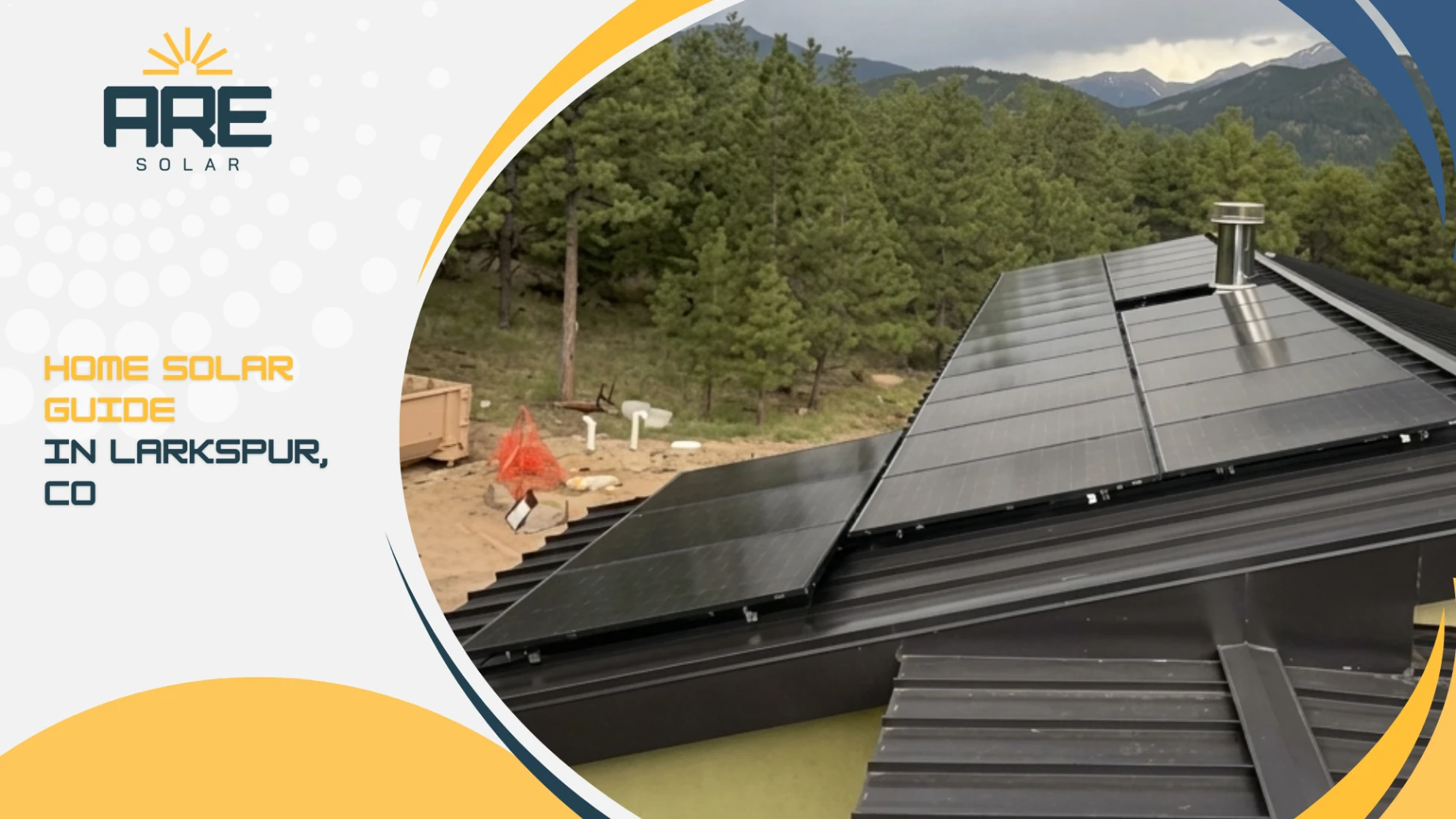
A home solar guide for Larkspur starts with one fact. Elevation matters here. A property’s specific elevation directly affects solar and structural design.
Snow loads, wind exposure, soil, and utility rules all shape the design. A residential solar installation should begin with engineering. It should not begin with a sales estimate.
Douglas County uses elevation-based snow load requirements. Properties between 6,500 and 6,999 feet require a 40 psf design snow load. Larkspur sits inside that band.
Ground-mounted systems face a second requirement. Douglas County’s minimum frost depth is 36 inches below finished grade.
Your utility matters too. Many Larkspur properties are served by CORE Electric Cooperative, formerly IREA. CORE has its own interconnection rules and solar policies.
ARE Solar designs around those realities. We look at your roof, your electrical system, your utility, and your goals. Equipment selection comes after.
Colorado Conditions Shape Solar Design
A rooftop solar array interacts directly with your home’s structure. The design has to account for Colorado weather. Snow accumulation adds weight to a roof system. Wind creates uplift forces on exposed equipment. Soil conditions affect ground-mounted foundations.
Those details are not paperwork. They determine whether the system belongs on your property. The rack attachment, layout, and engineering must match the site.
Ground mounts require the same attention. Soil conditions, frost depth, and foundation design all shape the final installation.
A good solar design answers these questions before construction begins:
- What snow load does this property require?
- How will the racking attach to the structure?
- What engineering applies to a ground-mounted array?
- How will the system move through permitting?
The right answers come from the address, not a template.
CORE Electric Cooperative Rules Affect System Size
Utility rules change the solar equation. CORE Electric Cooperative customers follow different rules than customers served by other utilities. Your interconnection application follows CORE’s process.
For residential systems, size matters. CORE’s current rules offer full retail-rate net metering for systems 10 kilowatts AC or smaller. Annual production also can’t exceed 200% of your yearly usage. Above 10 kilowatts AC, the system won’t be net-metered. It still earns a monthly credit, but at CORE’s avoided-cost rate instead of retail.
That means bigger is not always better.
The goal isn’t filling every available inch of roof space. The goal is matching your system to your energy use and CORE’s rules.
A thoughtful design considers:
- Your current electricity usage.
- Future changes like electric vehicles or heating upgrades.
- Battery storage goals.
- CORE’s compensation structure.
We model these details before construction begins.
Federal Solar Incentives Changed in 2026
The federal solar incentive landscape changed. The Residential Clean Energy Credit under Section 25D was available for qualifying expenditures made before January 1, 2026. The IRS confirms it doesn’t apply to systems placed in service after that.
That affects homeowners planning new systems in 2026.
Colorado incentives still matter. The Colorado Energy Office publishes current state programs and policies. Review those benefits before making a decision.
The important question isn’t only which incentives exist. It’s whether the system makes sense without depending on one incentive. Solar is a long-term property decision. Design, equipment, utility rules, and installation quality all matter more than any single credit.
How Homeowners Should Decide If Solar Fits
Solar is a consequential decision for your property. Start by understanding your own situation.
Is my roof ready? A roof nearing replacement may need attention first. Solar panels are expected to operate for decades. Installing them on a roof that needs replacement soon creates another project later.
Do I understand my electricity use? Look at your past electric bills. A good design starts with actual consumption. It considers how your household uses energy today, and what may change tomorrow.
Does the design match Colorado conditions? Ask whether the system accounts for local snow and wind requirements. Ask how permitting will be handled. Ask who completes inspections and utility approval.
Does the installer handle the entire process? A solar project involves design, engineering, permits, installation, inspections, and utility approval. Each step matters. A system isn’t finished when panels reach the roof. It’s finished when the utility grants Permission to Operate.
Choosing a Solar Installer in Larkspur
A difference in price often comes with a difference in execution. The questions below reveal how a project will actually be handled.
| Question | Why It Matters |
| Is the design based on my property address? | Local conditions affect engineering. |
| Does the racking meet Colorado snow requirements? | Roof loads must match elevation and structure. |
| Who manages permits and inspections? | A completed system requires approvals. |
| Who handles utility interconnection? | CORE requirements affect operation. |
These questions protect homeowners from unexpected problems. They also reveal whether the installer understands your area.
Battery Storage and Energy Independence
Many homeowners are also exploring battery storage Colorado options. Batteries can store energy produced during the day. That stored energy can provide additional flexibility when electricity needs change. Some homeowners use batteries for backup power planning.
Battery design depends on the home and the homeowner’s goals. Backup needs, electrical loads, and available space all matter.
Some properties require more complex solutions. Mountain homes or remote properties may need off-grid solar Colorado designs. Those systems require careful planning. Energy production and storage must work together.
The right battery system is not the same for every home. The design should reflect how the property is used.
FAQ About Residential Solar in Larkspur
Does Larkspur elevation affect solar installation?
Yes. Elevation affects engineering requirements for solar projects. Douglas County uses elevation based snow load requirements, which influence racking and structural design.
Is CORE Electric Cooperative different from Xcel Energy?
Yes. CORE Electric Cooperative operates separately from Xcel Energy. Its members follow CORE’s own rates, regulations, and interconnection requirements.
Can homeowners still receive the federal solar tax credit in 2026?
The federal Residential Clean Energy Credit ended for systems placed in service after December 31, 2025. Homeowners should review current state and local incentives before starting a project.
Can ARE Solar finish an abandoned solar project?
Yes. ARE Solar evaluates unfinished systems and works toward completing the remaining requirements. That includes reviewing existing equipment, correcting issues, and moving the project toward PTO.
Bring Your Larkspur Solar Questions to ARE Solar
Solar decisions deserve careful thought. Your home, your electrical system, and your future needs all deserve attention. ARE Solar has spent generations working in Colorado conditions. The company understands what Front Range homes require.
If you are considering residential solar installation in Larkspur, start with a conversation. Bring your questions, your utility concerns, and your goals.
ARE Solar can help you understand what your property can support. Reach out today and begin designing a solar system built around your home, not a generic template.