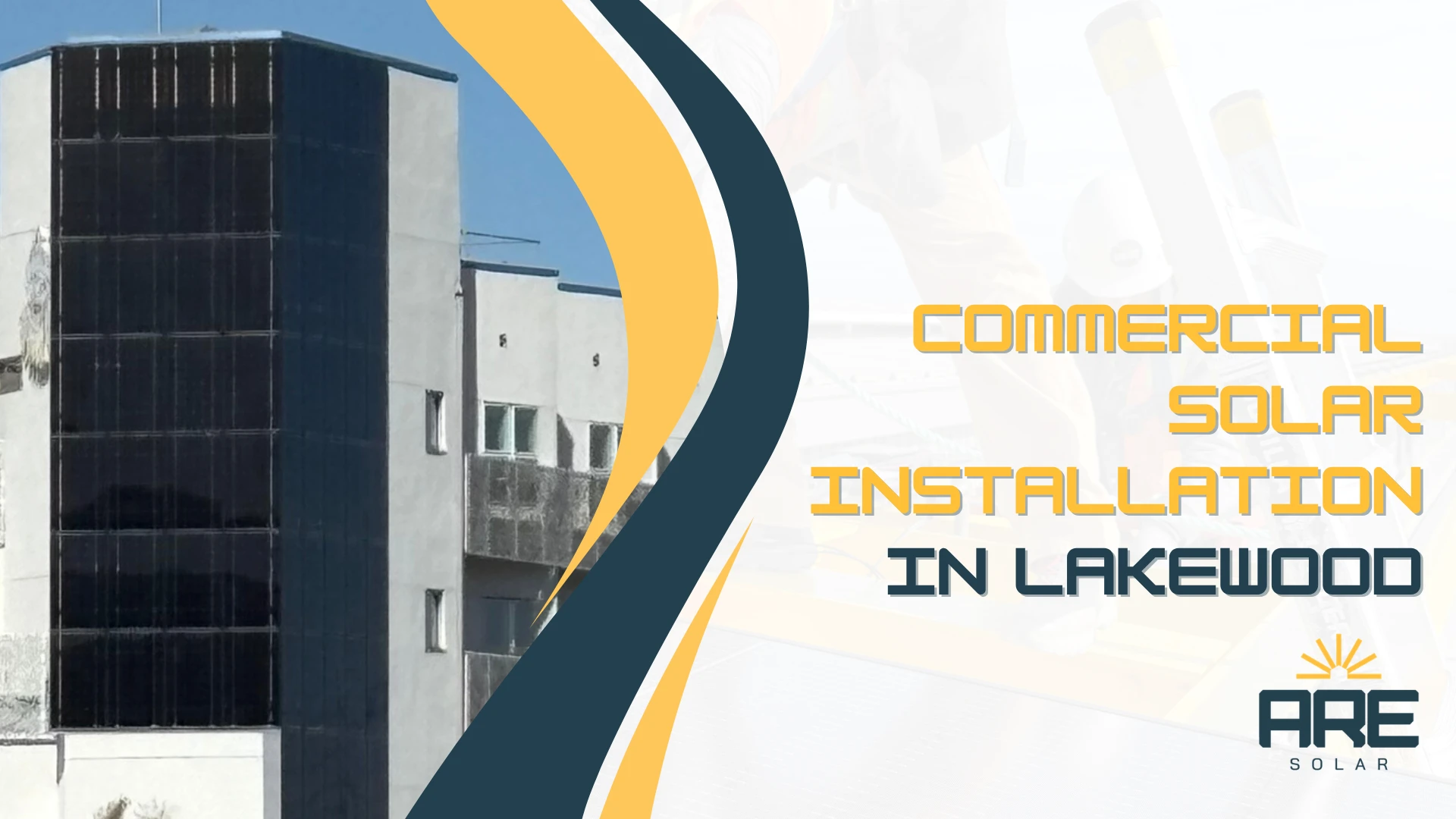
Commercial solar installation in Lakewood works differently than a residential rooftop job. The building is bigger. Permitting runs through the City of Lakewood’s Public Works Department. Interconnection runs through Xcel Energy. And the roof has to survive Front Range wind gusts and snow loads. It has to work, not just look good in a rendering.
A Lakewood business owner needs a system engineered for these exact conditions. They need a permit process handled correctly the first time. And they need a straight answer on the federal commercial tax credit. That changed in 2026.
The residential credit expired at the end of 2025. The commercial credit, under Section 48E, is still active. But the window to lock in the full rate tightened hard this July.
We’ll walk through what that means for a Lakewood property. We’ll cover what the build process actually looks like. And we’ll cover what separates a contractor who finishes the job from one who doesn’t.
Lakewood’s Roof Is Not a Generic Roof
A commercial roof in Lakewood carries snow load requirements set by the City of Lakewood, not by Jefferson County. The design figure is a non-reducible 30 pounds per square foot ground snow load.
It also faces wind events that flatter, calmer climates rarely see. Commercial solar racking has to be engineered for this specific building and site. That’s not a marketing point. It’s a structural one.
Before ARE designs a single rack, our structural engineers check the roof’s existing load capacity. We weigh that against panels, racking, and snow accumulation. We check parapet height, drainage patterns, and any rooftop equipment that could shade the array.
Commercial roofs in Lakewood often carry HVAC units, vents, and skylights that a residential job never has to route around. Getting that layout wrong creates real problems. It can cause drainage issues, void roofing warranties, or fail inspection.
Permitting in Lakewood: What Actually Happens
Commercial solar permitting in Lakewood runs through the city’s building division. An electrical permit gets reviewed alongside the structural documents. A commercial system also needs an interconnection agreement with Xcel Energy before it can turn on.
That interconnection process governs how the system connects to Xcel’s distribution grid. It sets the requirements that apply before a system can run in parallel with the utility.
This is where a lot of commercial projects stall. A permit gets submitted with incomplete structural calculations. An interconnection application sits in a queue because the paperwork was wrong the first time.
ARE handles design, permitting, installation, inspection, and interconnection as one continuous process, in-house. We don’t sell a system and hand it off to a subcontractor. If a utility approval runs long, we tell the client exactly why, and what happens next. No filler, no guessing.
The 2026 Tax Credit Window, Plainly Stated
Here is the current federal picture, verified against IRS guidance. The commercial credit under Section 48E is still active, but new deadlines apply.
Applicable solar projects generally need construction to begin by July 4, 2026. Miss that date, and different rules apply. Projects placed in service after 2027 fall under new termination provisions if construction started late.
The base credit rate is 6%. That rate can rise to 30% when a project meets prevailing wage and apprenticeship requirements. Additional bonus credits may apply for qualifying projects, too.
So don’t treat July 2026 as a flat “30% deadline.” Eligibility depends on when construction began. It depends on how the project meets wage and apprenticeship rules. It depends on other project-specific factors.
These rules are new. Tax treatment varies by taxpayer and by project. Confirm your eligibility with a tax professional. Check current guidance directly at irs.gov and energy.gov. Colorado businesses can also check state-level programs through the Colorado Energy Office.
What a Commercial Build Actually Looks Like
A commercial solar installation in Lakewood starts with a site visit and a structural assessment. From there, ARE designs the system around the building’s actual roof. We factor in the actual equipment layout and the actual energy load. Nothing here comes from a standard template.
Permitting and the Xcel interconnection application go in together, so nothing sits waiting on the other. Installation follows, then inspection, then permission to operate. A grid-connected system isn’t cleared for normal operation until those approvals are granted. We don’t consider a job finished until that happens.
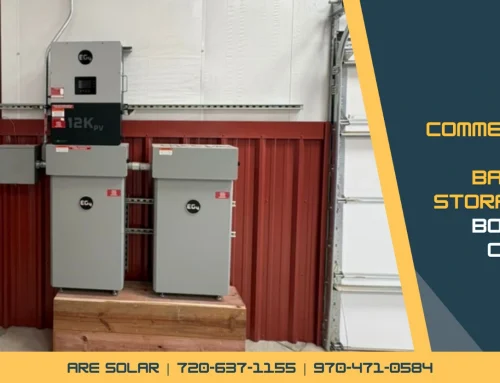
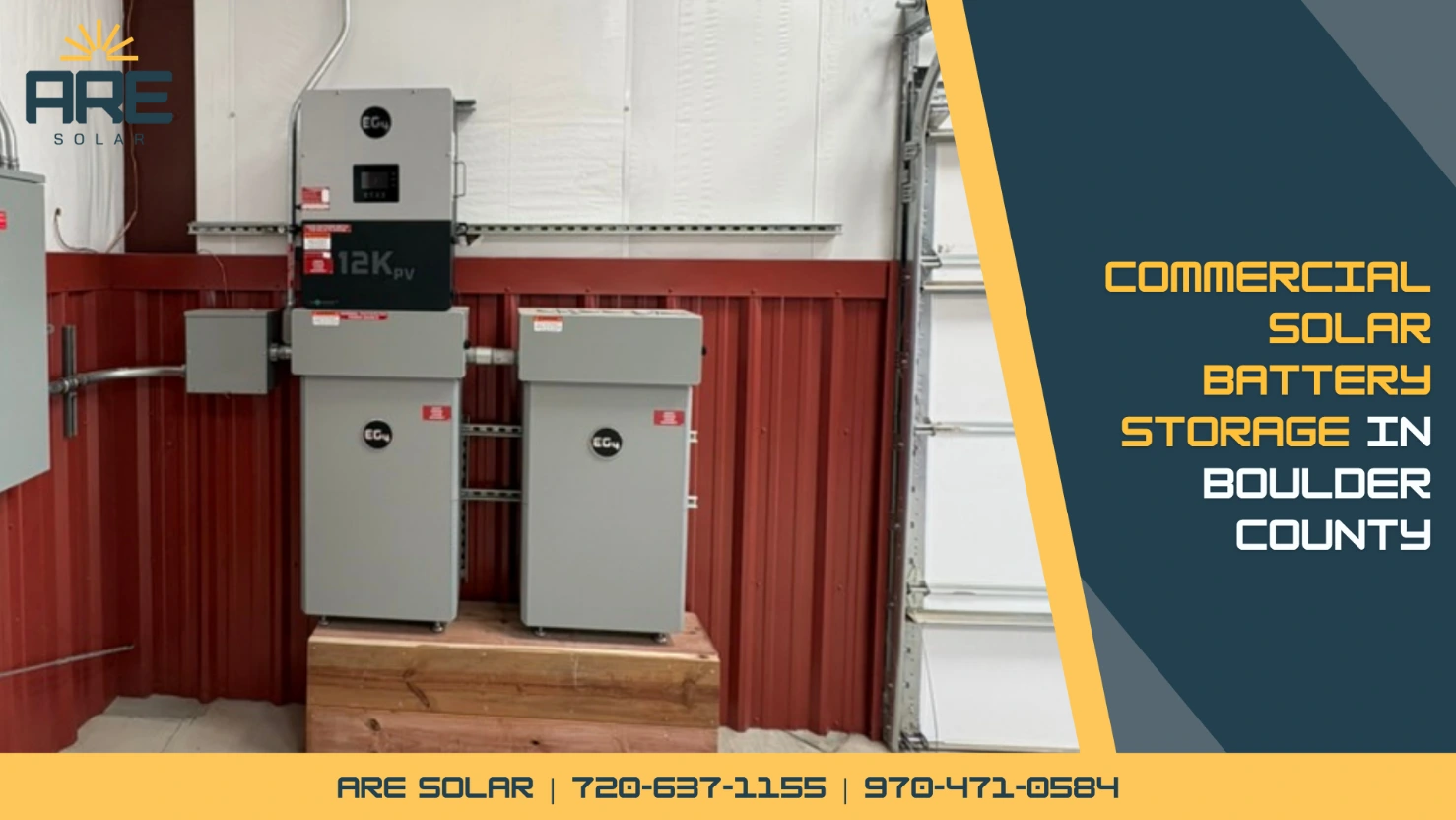
For businesses considering battery storage alongside solar, we install inverters paired with battery banks. They’re sized for the building’s actual backup needs during a Front Range outage. That’s a separate conversation from the panels themselves, and we walk through it project by project.
FAQ: Commercial Solar in Lakewood
Does Lakewood require a separate permit for solar from the standard building permit?
Solar installations require both a building permit and an electrical permit through the City of Lakewood, reviewed together with structural documentation for the racking system.
How long does commercial solar permitting take in Lakewood?
Timelines vary by project size and current permit office volume. A complete, accurate submission the first time is the single biggest factor in avoiding delays.
Is the commercial solar tax credit still available in 2026?
Yes. The commercial credit under Section 48E is still active, but the deadline turns on when construction began. A project that began construction on or before July 4, 2026 generally has until the end of the fourth calendar year after construction starts. A project beginning construction after that date has to be placed in service by December 31, 2027. Confirm specifics with a tax professional.
Does ARE Solar handle the Xcel Energy interconnection application?
Yes. We manage design, permitting, installation, inspection, and interconnection as one process, from first site visit through permission to operate.
Will solar be safe for my roof?
That is not a judgment call. It is a calculation. Lakewood requires a structural analysis stamped by a Colorado-registered professional engineer for any solar system on a commercial building. The engineer checks your existing roof capacity against the added weight of panels, racking, and accumulated snow. You get that answer before anything gets installed.
Ready to Look at Your Roof
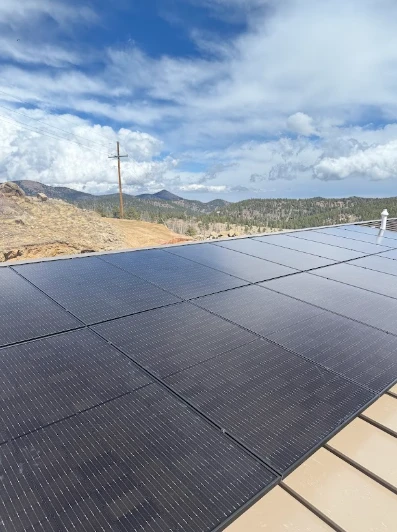
A Lakewood commercial roof either supports a system built for Colorado conditions, or it doesn’t. There’s no in-between worth signing a contract for.
If you want a structural assessment done right, call ARE Solar. If you want a straight answer on the 2026 tax credit deadline, request a site visit. We’ll walk your roof. We’ll run the numbers honestly. We’ll tell you exactly what it takes to get built, inspected, and turned on.