How Ranches Near Larkspur Are Reframing Energy Costs Before They Escalate
Energy costs in Douglas County are no longer stable and ranch operations are absorbing the impact first
Ranches near Larkspur are operating in a very different energy environment than even a few years ago. Electricity costs across Colorado continue to rise due to grid expansion, infrastructure upgrades, and increasing rural demand across Douglas County.
For agricultural properties, this shift is not abstract. It directly affects irrigation systems, barn operations, cold storage, fencing infrastructure, and year-round equipment usage. These systems run continuously or seasonally at high load, which means even small utility increases compound quickly into significant annual operating expenses.
This is why more property owners are actively evaluating agricultural solar installation in Douglas County, Colorado not as an upgrade but as a cost-control strategy designed to stabilize long-term operating exposure.
The question for ranch operators is no longer whether energy costs will rise. The real question is how much of that increase can still be controlled over the next 20–25 years.
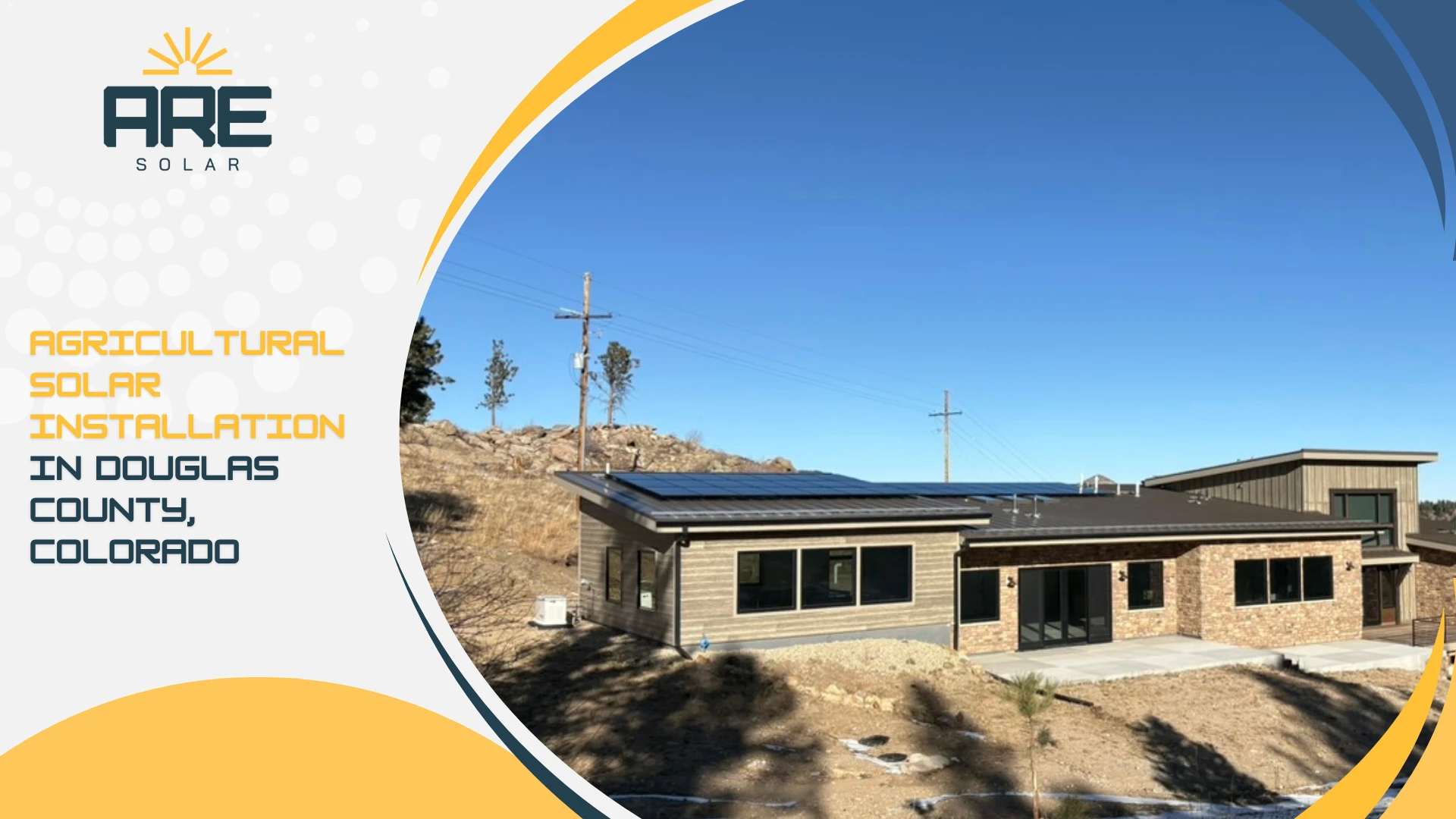
Why agricultural solar installation in Douglas County, Colorado is becoming a cost-control decision
Solar adoption on ranches is increasingly driven by one financial objective: reducing exposure to unpredictable utility escalation.
Unlike commercial buildings with consistent load profiles, ranches operate on fluctuating demand cycles:
- Irrigation systems that spike seasonally
- Barns and livestock facilities with constant baseline demand
- Cold storage systems requiring uninterrupted power
- Equipment loads that vary throughout the year
This creates a billing structure that is highly sensitive to rate increases. Even when consumption remains unchanged, total energy costs continue to rise.
A properly engineered agricultural solar installation in Douglas County, Colorado offsets this volatility by shifting a portion of energy production on-site. The result is not just reduced consumption from the grid but reduced dependence on future utility pricing conditions.
At scale, this transforms solar from an environmental decision into a long-term operating cost stabilization asset.
Why farm solar energy in Larkspur must be engineered around real usage—not assumptions
Solar systems on ranch properties fail or underperform when they are designed using generic consumption models.
Energy usage on agricultural land is not flat. It is cyclical, seasonal, and operationally driven.
Typical demand sources include:
- Irrigation pumps with high seasonal intensity
- Barn operations requiring consistent baseline power
- Refrigeration and storage systems running 24/7
- Equipment charging and intermittent machinery use
This is why farm solar energy in Larkspur must be designed around actual operational load data, not simplified residential or commercial templates.
When system production aligns closely with usage cycles:
- Offset efficiency increases
- Grid reliance decreases
- Long-term savings become more stable and predictable
When it doesn’t, production mismatches reduce financial return over time.
Site conditions in Larkspur directly shape solar performance outcomes
Ranches in Douglas County operate within a specific Front Range environment that directly affects system engineering and long-term output.
Key site variables include:
High elevation exposure
Higher solar irradiance improves production potential, but also increases UV exposure that affects long-term equipment wear.
Snow load variability
Structural design must account for seasonal accumulation and drainage patterns, particularly for ground-mounted systems.
Wind exposure and open terrain
System anchoring, spacing, and structural reinforcement must be engineered for sustained wind conditions common in exposed ranch land.
Land grading and soil composition
Ground-mounted systems are often preferred in agricultural environments, but feasibility depends on terrain stability and grading requirements.
Electrical infrastructure constraints
Many ranches require service upgrades or interconnection planning depending on system size and existing utility capacity.
These conditions directly influence system design, total installation cost, and long-term reliability.
Why financial modeling determines whether solar actually delivers expected ROI
The long-term value of solar is not defined by panel efficiency, it is defined by the accuracy of the financial model behind it.
For ranch properties, critical inputs include:
- Seasonal consumption patterns
- Irrigation-driven load variability
- Utility rate escalation projections
- System degradation over time
- Weather and irradiance assumptions
If these inputs are oversimplified, projected savings may not reflect actual operational performance.
This is especially relevant for farm solar energy in Larkspur, where seasonal demand cycles can significantly distort annual averages.
Utility structures such as Xcel Energy policies also play a role in:
- Interconnection approval timelines
- Net metering or credit structures
- System sizing limitations
These variables determine whether a system performs at expected financial efficiency over its lifetime.
The operational mistake most ranch owners make before going solar
One of the most common planning errors is focusing on equipment selection before understanding system design requirements.
On agricultural properties, equipment quality is only one part of performance. Long-term outcomes are determined by:
- System orientation and panel layout
- Load matching to real consumption cycles
- Structural mounting based on terrain and wind exposure
- Electrical integration with existing infrastructure
- Avoidance of operational disruption during installation
Without these factors aligned, even high-quality systems underperform financially.
This is why agricultural solar installation in Douglas County, Colorado requires engineering-led planning rather than product-based selection.
What solar actually changes for ranch operations over time
The financial impact of solar on ranches is not immediate cost elimination, it is long-term cost stabilization in a rising-rate environment.
Over a 25-year system lifespan, solar shifts operating structure in three ways:
- Reduces exposure to utility price escalation
- Converts variable energy costs into partially fixed energy production
- Improves predictability of annual operating budgets
This predictability becomes increasingly valuable as utility pricing continues to change over time.
The key advantage is not just lower bills, it is control over future cost volatility.
FAQ: Agricultural Solar Near Larkspur
Why is solar different for ranches compared to commercial buildings?
Ranches operate with seasonal and distributed energy loads, unlike commercial buildings with steady demand. This requires systems designed around fluctuating consumption patterns such as irrigation cycles, cold storage, and livestock operations.
What should ranch owners evaluate before installing solar?
Key factors include energy usage patterns, seasonal load variation, site conditions, electrical infrastructure capacity, and utility interconnection requirements. These determine whether the system performs as expected over time.
How do site conditions in Douglas County affect solar systems?
Elevation, snow load, wind exposure, and land grading all influence system design and durability. These factors determine mounting structure, layout, and long-term performance stability.
Does solar provide consistent savings year-round?
No. Savings fluctuate based on seasonal energy usage. Irrigation-heavy periods typically yield higher offsets, while low-demand seasons rely more on grid usage. Proper system design balances these variations across the year.
What is the long-term benefit of solar for ranches?
Solar provides long-term cost stability, reduced exposure to utility rate increases, and more predictable operating expenses over a 20–25 year period.
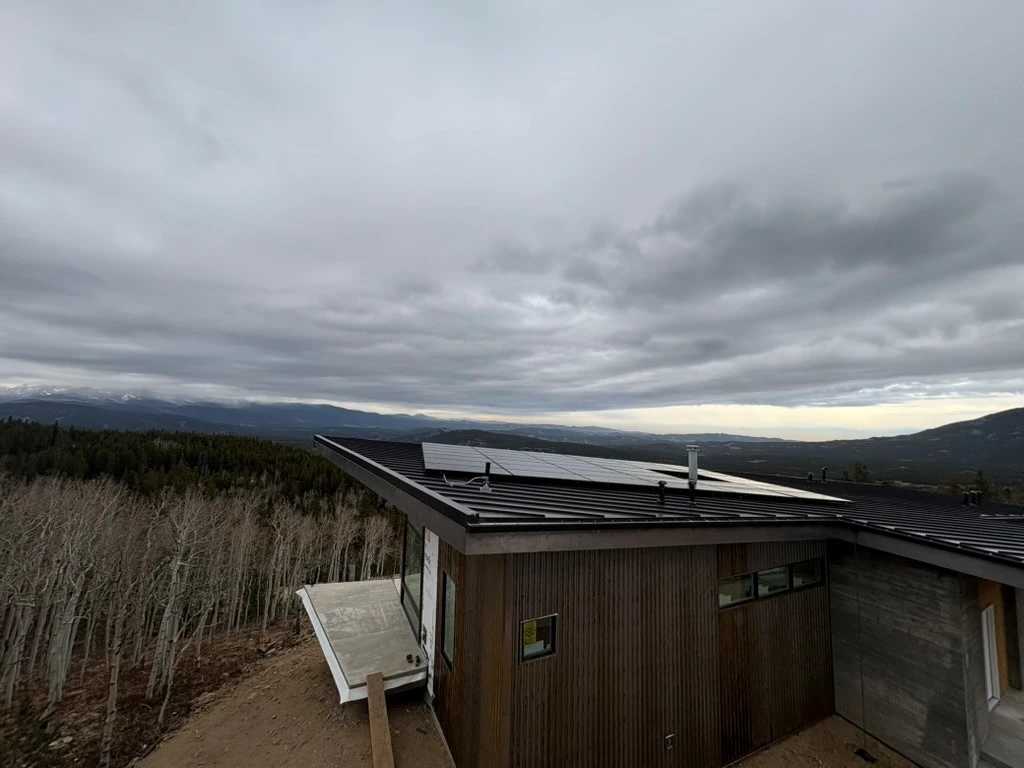
Build long-term energy stability into your ranch operations
Ranches near Larkspur are entering a period where energy cost exposure is becoming a defining operational factor, not a background expense.
At ARE Solar, we approach agricultural solar installation in Douglas County, Colorado as infrastructure planning rather than product installation. Every system is designed around real land conditions, operational load profiles, and long-term financial modeling accuracy.
If you’re evaluating farm solar energy in Larkspur, the first step is not installation, it’s understanding how your energy usage behaves over time.
Let’s model it properly and design a system built for how your ranch actually operates.