What Douglas County Businesses Need to Know Before Installing Commercial Solar
Energy costs in Colorado have followed a steady upward trend, shaped by grid modernization, population growth, and increasing demand across expanding commercial corridors. In Douglas County, this pressure is becoming more visible as new developments and business operations place additional load on the utility system.
For many business owners, this creates a shift in how energy is evaluated. Solar is no longer viewed as a sustainability upgrade alone, but as a way to stabilize long-term operating costs. This is why interest in commercial solar installation in Douglas County, CO continues to grow.
At first glance, most proposals look similar. System sizes, projected savings, and equipment specifications often appear straightforward. But once you begin comparing options, the differences become clear.
The reality is that commercial solar is not defined by panels alone. It is shaped by engineering assumptions, financial modeling, and local conditions that determine long-term performance. Understanding these variables helps you evaluate solar as a capital investment, not just an installation.
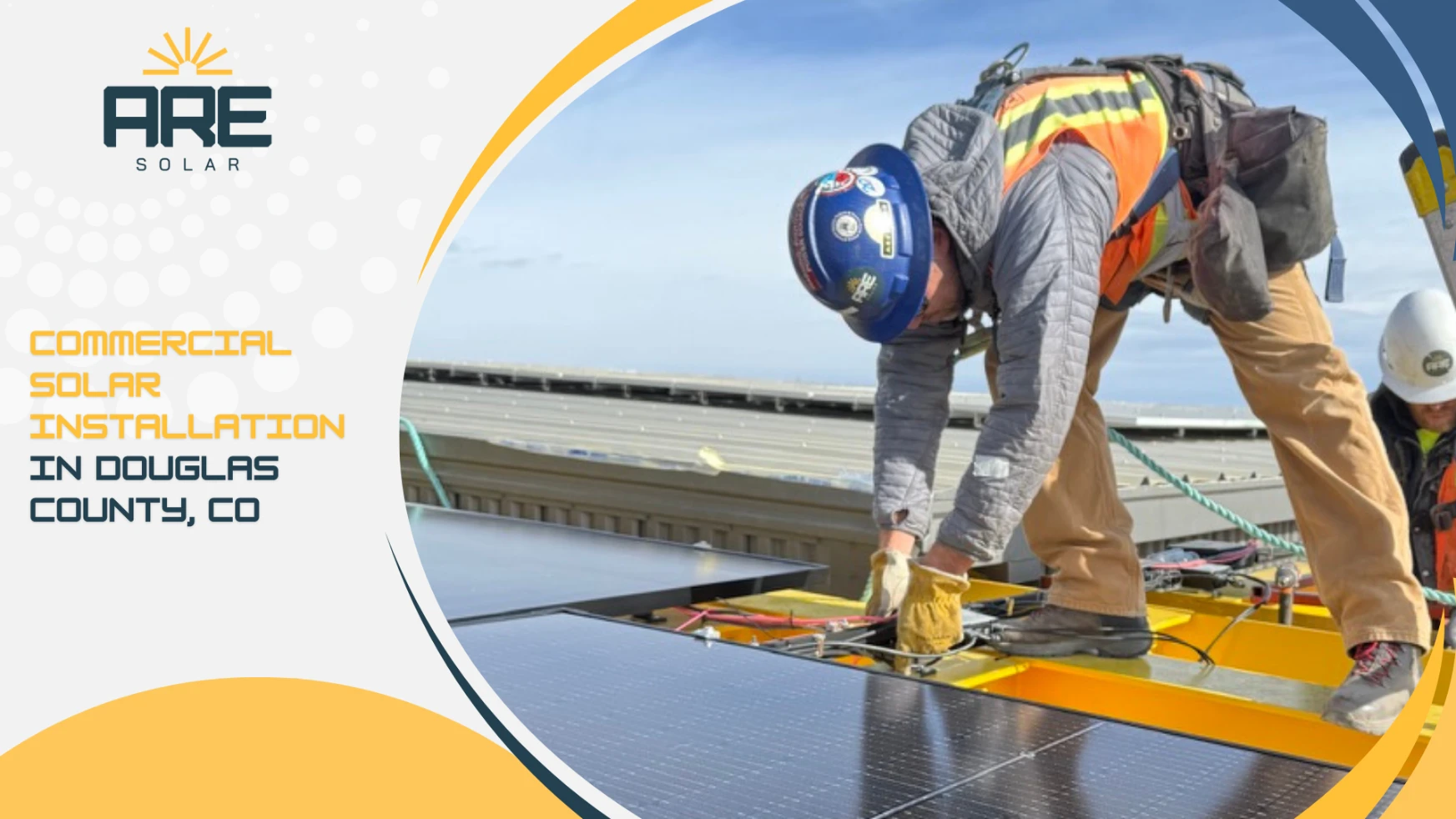
Why Commercial Solar Installation in Douglas County, CO Depends on Design Assumptions
A successful solar project is determined long before installation begins. It starts with how the system is modeled, how the site is evaluated, and how local conditions are interpreted.
Douglas County sits within Colorado’s Front Range, where high elevation, snow load variability, and seasonal weather shifts create a unique operating environment. These factors influence how systems are designed and how they perform over time.
Higher elevation increases solar irradiance, which can improve production. At the same time, stronger UV exposure affects long-term material durability. Snow accumulation and freeze-thaw cycles introduce structural considerations that impact racking systems and panel spacing.
Utility integration adds another layer. Xcel Energy interconnection requirements and rate structures directly affect system sizing and financial outcomes. Two buildings that appear identical can produce very different results depending on how these variables are modeled.
This is why experienced engineering evaluation is essential before committing to any design.
Site Conditions That Directly Influence System Performance
Structural Design and Roof Constraints
Commercial roofs vary in material, age, and load capacity. Some can support ballasted systems, while others require mechanically attached designs. These differences affect installation complexity, cost structure, and long-term reliability.
Even small structural constraints can alter system layout and reduce usable capacity.
Climate and Elevation Effects
Douglas County’s high-altitude environment increases solar exposure but also introduces higher UV stress on system components. Over time, this affects degradation rates and overall system performance.
Snow load considerations also influence tilt angles and spacing. Systems must be designed to maintain consistent output across seasonal changes.
Utility and Grid Integration
Xcel Energy requirements determine how systems connect to the grid. In some cases, upgrades to electrical infrastructure may be required. These factors are often not visible in early proposals but can significantly affect timelines and cost.
Understanding these constraints early helps avoid delays and unexpected adjustments during construction.
Financial Modeling Is Where Solar Value Is Defined
Financial performance is one of the most important aspects of solar, yet it is also where assumptions vary the most.
Production estimates depend on weather datasets, degradation rates, and utility rate projections. If these inputs are overly optimistic or based on generic models, financial outcomes can shift over time.
In contrast, accurate modeling uses conservative, site-specific assumptions. This creates more stable projections and clearer expectations for long-term returns.
When reviewing commercial solar installation services in Douglas County, CO, it is important to understand how these financial models are built. Transparent assumptions allow you to evaluate whether projected savings are realistic.
Incentives such as the federal Investment Tax Credit also influence financial structure. System size, ownership model, and project timing all affect how these benefits are applied.
Why Proposal Differences Reflect More Than Pricing
It is common to compare proposals based on cost alone. However, pricing differences often reflect deeper variations in engineering detail and modeling quality.
Some proposals include detailed structural analysis and site-specific assumptions. Others rely on default values that may not fully reflect local conditions. These differences can significantly impact long-term performance and ROI accuracy.
This is especially important when comparing commercial solar installation services in Douglas County, CO, where site conditions and utility requirements vary widely between properties.
A lower upfront cost may appear attractive, but it does not always represent better long-term value if the underlying assumptions are incomplete.
Long-Term Performance Depends on Modeling Accuracy
Commercial solar systems are typically evaluated over 20 to 30 years. This means early design decisions influence performance for decades.
More accurate modeling leads to:
- stable financial forecasting
- better alignment between projected and real-world performance
- improved long-term asset value
- stronger confidence in ROI projections
Overly aggressive estimates, on the other hand, can create uncertainty and reduce trust in projected outcomes.
This is why engineering rigor matters more than simplified projections.
Local Expertise Helps Translate Conditions Into Better Design
Douglas County presents a combination of environmental and regulatory factors that require localized expertise. High elevation, weather variability, and evolving utility policies all influence system design.
Working with a team that understands these conditions helps ensure that assumptions reflect actual site behavior rather than generalized averages.
This improves not only system performance, but also the reliability of financial projections.
FAQ: Commercial Solar in Douglas County
What should I evaluate before starting a solar project?
You should evaluate how the system was modeled, including the assumptions used for production, degradation, and utility rates. It is also important to understand how local conditions such as snow load and elevation were incorporated into the design. Reviewing interconnection requirements from Xcel Energy can also help clarify timelines and feasibility.
Why do solar proposals vary in cost?
Cost differences often reflect variations in engineering depth, equipment selection, and financial modeling assumptions. A lower-cost proposal may rely on simplified assumptions, while a higher-cost proposal may include more detailed analysis and long-term performance considerations.
How does Douglas County’s environment affect solar performance?
High elevation increases solar irradiance, which can improve production. However, it also introduces higher UV exposure, which affects system degradation. Snow load and seasonal weather changes also influence system design and durability.
Are solar savings guaranteed?
Solar savings are based on modeled projections, which depend on assumptions such as weather data, system performance, and utility rates. When these assumptions are accurate and site-specific, projections tend to be more reliable.
What role does utility policy play in solar design?
Utility policies influence how systems connect to the grid, how excess energy is credited, and how systems are sized. These factors directly affect both system performance and financial returns.
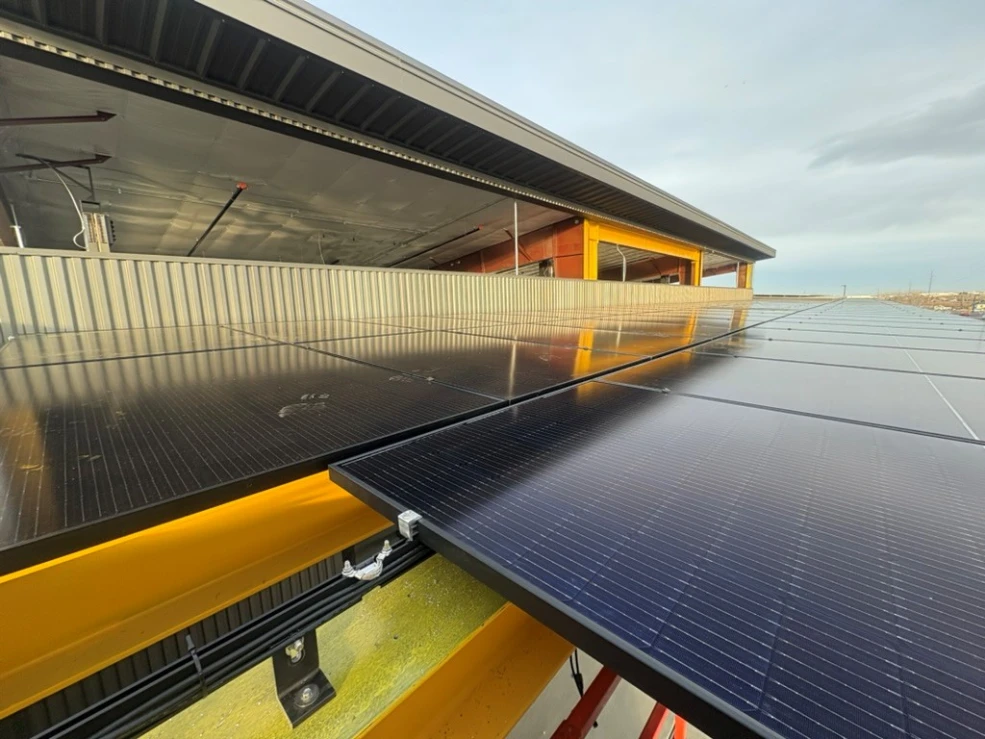
Building Smarter Solar Decisions in Douglas County
We help Douglas County businesses evaluate commercial solar installation in Douglas County, CO with a focus on engineering precision, financial clarity, and long-term performance.
At ARE Solar, we approach every project as a financial and technical decision, not just an installation.
Let’s evaluate your building, model your system, and move forward with a solar strategy built on real Colorado conditions.