Castle Rock isn’t just another Colorado town on the map. It’s a high-elevation community where intense sun, heavy seasonal snow, and powerful wind events all shape how homes are built. At over 6,000 feet above sea level, solar energy production can be exceptional, but only if the system is engineered specifically for local conditions. If you are one of the property owners planning new construction solar installation services in Castle Rock, you need more than a standard, cookie-cutter layout. You need a system designed for altitude, engineered for snow loads, and reinforced for wind uplift.
UV exposure is stronger. Temperature swings are wider. Snow accumulation patterns are different from nearby Denver suburbs. If you’re building a new property in Castle Rock, your solar strategy should be integrated from the blueprint stage, not retrofitted as an afterthought. The earlier you design for these conditions, the more efficient, durable, and cost-effective your system will be long term.
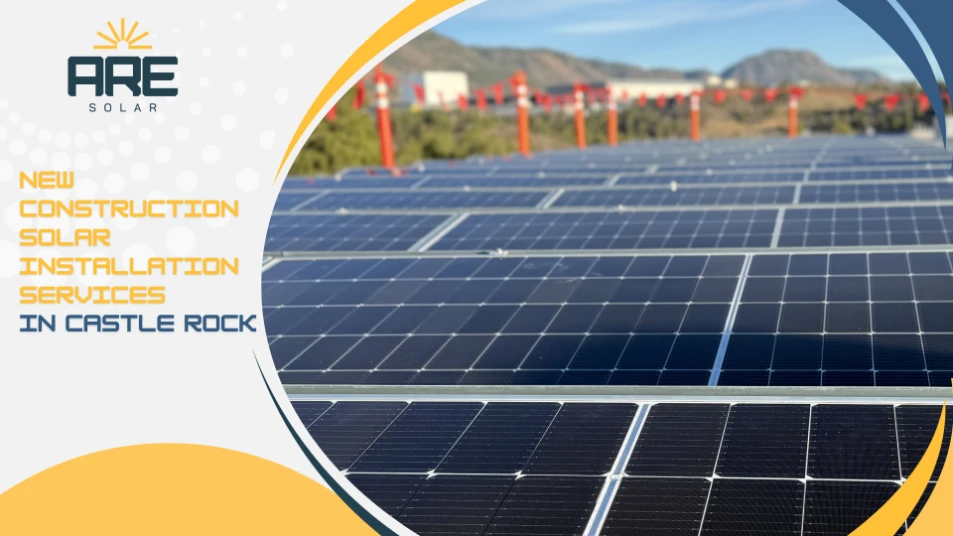
Understanding Castle Rock’s High-Elevation Solar Advantage
Castle Rock’s elevation is a gift for solar performance. Thinner atmosphere means less air mass blocking sunlight, resulting in higher solar irradiance compared to lower-altitude regions. Panels that are positioned correctly can produce more electricity per square foot.
However, increased irradiance also means:
- Higher UV exposure on panel backsheets and wiring
- Greater thermal cycling between hot summer days and freezing nights
- Accelerated material degradation if lower-grade components are used
This is where experienced local providers like ARE Solar stand apart. Hyper-local engineering knowledge ensures materials and mounting systems are chosen for long-term resilience, not just short-term output.
Many are searching for new construction solar installation services near me without realizing that elevation-specific design dramatically impacts system lifespan. Durability is just as important as production in Castle Rock.
New Construction Solar Installation Services in Castle Rock
Designing solar into a new build offers advantages that retrofit projects simply can’t match. Roof pitch, orientation, structural load allowances, and conduit pathways can all be optimized before the first shingle is installed.
Tilt Optimization for Maximum Output
At Castle Rock’s latitude, optimal tilt angles differ depending on whether you want to maximize annual production or winter generation. Because snow reflection (albedo effect) can actually increase winter solar gains, proper tilt becomes even more important.
- Steeper tilt can help snow shed faster
- Balanced pitch improves year-round efficiency
- Orientation planning prevents shading from future tree growth or nearby builds
When builders coordinate early with a solar engineering team, the roofline itself can be optimized for performance, reducing reliance on mounting adjustments later.
Designing With Future Energy Needs in Mind
New construction is the ideal time to plan for EV charging, battery storage, and future energy demands. Property owners can integrate storage-ready designs, oversized conduits, and electrical panel capacity from day one. That’s not just convenience but also financial foresight.
Engineering for Snow Loads and Wind Uplift
Castle Rock experiences significant snow accumulation in winter and strong wind events year-round. Solar systems must meet both structural and aerodynamic standards.
Snow Load Calculations
Solar panels change how snow behaves on a roof. Engineering must account for:
- Drift zones near ridgelines
- Uneven melt patterns
- Structural reinforcement at attachment points
Improper snow-load modeling can stress rafters and reduce roof longevity. Hyper-local design ensures compliance with Douglas County requirements while preserving roof integrity.
Wind Uplift Resistance
Wind speeds increase at higher elevations. Solar arrays act like aerodynamic surfaces, so attachment systems must resist uplift forces.
High-quality racking systems include:
- Reinforced flashing systems
- Lag bolts engineered for uplift resistance
- Rail systems tested for high-wind exposure
Hyper-Local Engineering: Why It Matters More Than Ever
Solar in Castle Rock is about understanding terrain, HOA guidelines, microclimates, and county permitting requirements. Every division has unique considerations, from wind exposure to lot orientation.
Choosing a team with hyper-local credibility means:
- Familiarity with Douglas County inspection standards
- Proven snow-load engineering calculations
- Experience designing systems that withstand local weather extremes
If you’re investing in a new build, integrating new construction solar installation services in Castle Rock from the planning phase prevents redesign costs later. It also locks in federal and state incentives while construction timelines are still flexible.
The window for optimal integration is narrow. Once roofing and framing are complete, flexibility decreases—and costs increase.
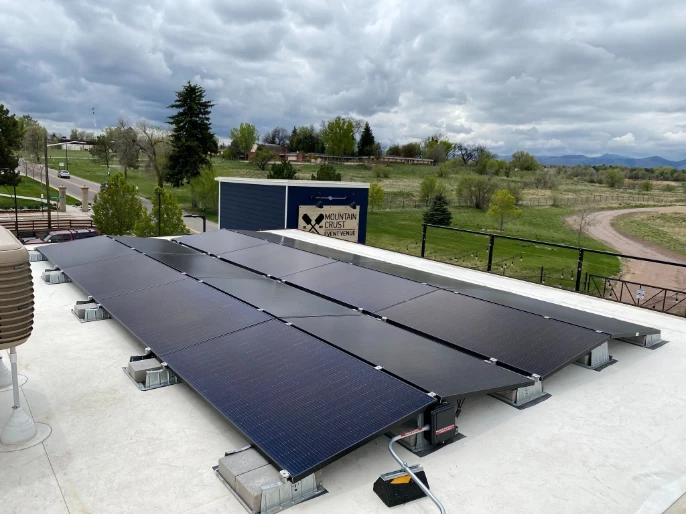
Built for Castle Rock’s Sun and Snow: Design and Install It Right with ARE Solar
ARE Solar understands how to engineer systems specifically for Castle Rock’s altitude and climate conditions. From tilt optimization to wind-rated racking systems, our approach prioritizes durability and long-term performance. If you’re planning a new build, integrating new construction solar installation services in Castle Rock during the design phase ensures your home is energy-ready from day one.
Don’t wait until construction is complete to start thinking about solar. The smartest, strongest systems begin before the roof goes on. Reach out to us today and let us design your system to thrive in Castle Rock’s sun, snow, and sky-high elevation.