Commercial battery energy storage safety in Colorado rests on four things. The equipment must be listed and tested. The layout must keep one failing unit from spreading to the next. Thermal design must handle Front Range temperature swings. And the local fire department should see the plan before installation day.
The rules tightened in 2026. Denver now enforces the 2024 International Fire Code. NFPA 855, the national storage standard, published a stricter 2026 edition. Where adopted, both change what a commercial battery project has to prove.
This post covers safety only. For sizing batteries around demand charges, see our commercial battery storage guide.
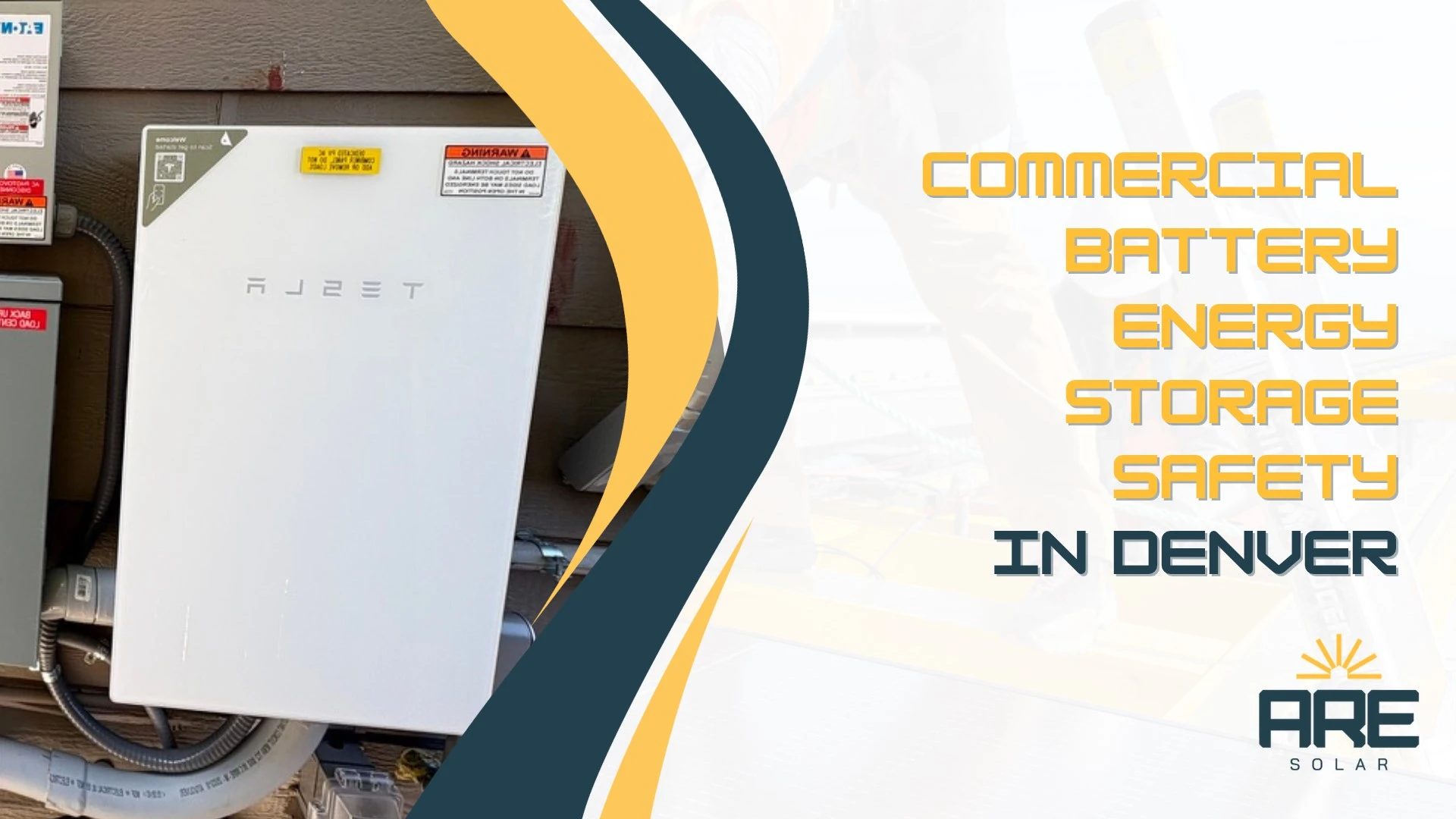
Is Commercial Battery Storage Actually Safe?
The data says failures are rare and falling. In October 2026, EPRI published new failure data. Global failure rates per gigawatt-hour fell 98% from 2018 to 2025. They fell 50% from 2024 to 2025 alone. EPRI credits better design, codes and battery management.
EPRI puts the annual failure rate at about 0.04% to 0.14% per battery container. Large oil-filled transformers run about 0.1% per unit-year for fire. Most of us walk past those every day.
Two findings matter more than the headline. Older systems, built before stricter codes, fail at higher rates. Indoor facilities fail more often and sustain more damage than outdoor ones. To be real, the risk didn’t disappear. It moved into design decisions. That makes every placement choice consequential.
What Changed for Colorado Battery Projects in 2026?
Three shifts landed this year.
The national standard got stricter. NFPA 855’s 2026 edition makes a hazard mitigation analysis the default requirement for most installations. It also adds a large-scale fire test. UL 9540A’s sixth edition, published in March 2026, builds that test in, with an effective date of January 2027. The test burns one unit and checks whether fire spreads to its neighbors at the manufacturer’s spacing. That’s a higher bar. Emergency response plans now need annual review and yearly refresher training. Local codes decide which edition applies, so ask your fire authority.
Local codes caught up. The 2025 Denver Building and Fire Codes took effect December 31, 2025. They’re built on the 2024 I-codes, including the fire code. Arvada and Broomfield also moved to 2024 codes this year. Electrical code editions vary by jurisdiction, so confirm yours before design.
Counties started writing their own rules. Logan County’s BESS regulations took effect February 17, 2026. They require an emergency operation plan built with local fire departments. Spacing between units must follow NFPA 855. Those rules cover facilities of 1 MW and up, larger than most commercial batteries. They still show where Colorado is heading.
Commercial BESS Fire Protection Starts With Where the Battery Goes
Most fire protection is decided before anyone orders equipment. It’s decided by location.
Under the 2024 International Fire Code, lithium-ion systems above 20 kWh fall under its energy storage provisions. That threshold is low. Depending on size, location and occupancy, reviewers may ask for UL 9540A test data and detection details. Indoor systems can also require fire-rated separation and ventilation. EPRI recommends fire walls or other barriers to segment large indoor sites.
Commercial BESS fire protection in Colorado also has to account for the weather. An outdoor cabinet needs clearance that drifting snow won’t bury. Responders need a path to it in February, not just July. Cabinets near loading docks need protection from trucks backing in.
Fire isn’t the only hazard. EPRI counts arc-flash, fire and explosion as failure incidents. Explosion needs its own controls. Failing cells can vent flammable gas. Gas detection, ventilation and deflagration venting address that risk inside enclosures.
Battery Thermal Runaway Prevention in Colorado Conditions
Thermal runaway is a cell heating itself faster than it can cool. Once it starts, heat can spread to neighboring cells. Battery thermal runaway prevention works in layers: cell chemistry, the battery management system, thermal control and tested spacing.
Colorado adds a twist most coastal guides skip. Our cold is as much a design input as our heat.
Take the Fortress eVault Max datasheet, an LFP battery listed to UL 9540 and tested to UL 9540A. Its published charging range starts at 32°F. Put that cabinet in an unheated Denver warehouse in January. On a bright, frozen morning, the solar array is ready to charge it. The battery management system should block charging until the cells warm up.
That refusal is a safety feature, not a defect. Charging lithium cells below their rated temperature stresses them. The design answer is placement or conditioning: a heated room, an insulated enclosure, or controls that wait. Summer works the other way. A dark cabinet on a south wall at altitude collects real heat by late afternoon.
Commercial Battery Installation Requirements: What the Permit Package Holds
Commercial battery installation requirements stack across three reviewers. The building department reviews structure and electrical. The fire authority reviews hazards and response. Your utility reviews the interconnection.
A complete package usually carries these pieces:
- UL 9540 listing for the whole system, not just the cells
- Applicable UL 9540A fire-test documentation, including installation-level large-scale testing results where required.
- A hazard mitigation analysis
- An emergency response plan the fire department has reviewed
- One-line diagrams, disconnects, labeling and shutdown locations
Xcel’s installation standard covers storage too. Our Denver permitting guide walks through the city and utility approvals in order. Commercial battery installation requirements build on that same sequence.
Questions to Ask Before a Battery Goes on Your Wall
A difference in price often comes with a difference in safety engineering. Ask any installer these questions:
- Is the full system UL 9540 listed, or only the battery modules?
- Will you hand the UL 9540A report to our fire marshal?
- Who wrote the hazard mitigation analysis?
- Where is the emergency shutdown, and has the fire department seen it?
- Who responds when the battery management system alarms at 2 a.m.?
That last question is the one people forget. Our monitoring alerts guide covers who should act on what.
Frequently Asked Questions
Do I need a fire permit for a commercial battery in Colorado? Usually, yes. Denver, Arvada and Broomfield now build on the 2024 codes. Lithium-ion systems above the code’s thresholds need fire review. Confirm with your fire district before you buy.
Can a commercial battery go indoors? Yes, with conditions. Separation, detection and ventilation rules apply. EPRI’s data shows indoor sites fail more often, so placement deserves real engineering.
What happens to a battery during a Colorado cold snap? A well-designed system protects itself. Its management system limits charging below the rated temperature. Good placement keeps that from costing you production.
Does adding a battery to existing solar need new approvals? Yes. Expect building, electrical and fire review, plus utility review. The battery changes what the system can do on the grid.
Walk Us to the Spot First
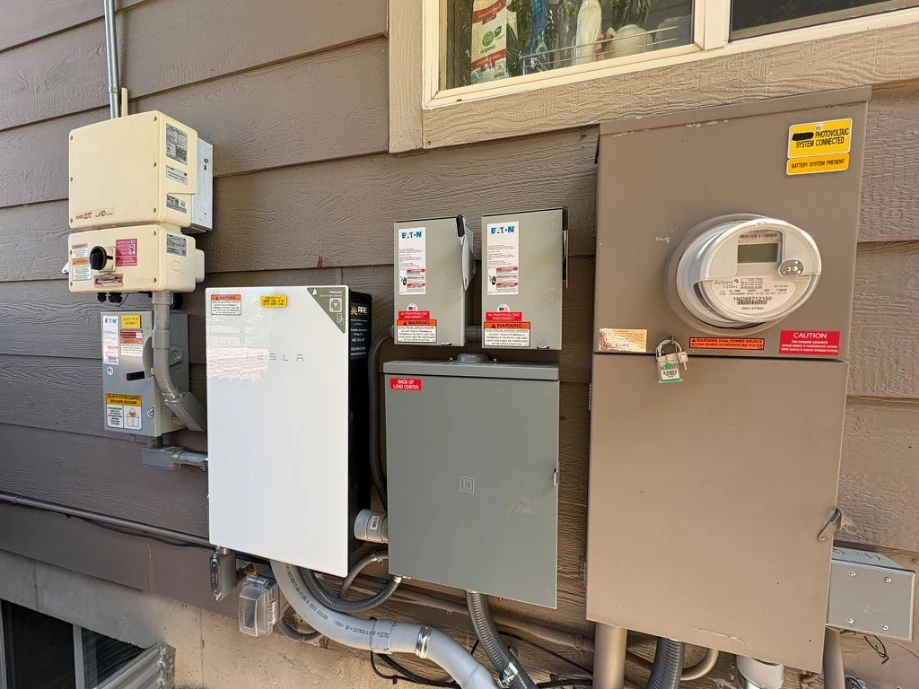
Before you pick a battery, pick the spot. Then show it to us. Send photos of the room, wall or pad you have in mind. Add your main panel’s nameplate and the closest exterior door. We’ll tell you what the fire code will say about it. Then what a Colorado January will say. Five generations of Colorado winters taught us where batteries should live. We finish what we start, and every system gets turned on safely.
Commercial battery energy storage safety starts with that one decision. Get it right, and the permit, the inspection and every winter after get easier. Send ARE Solar your site photos.