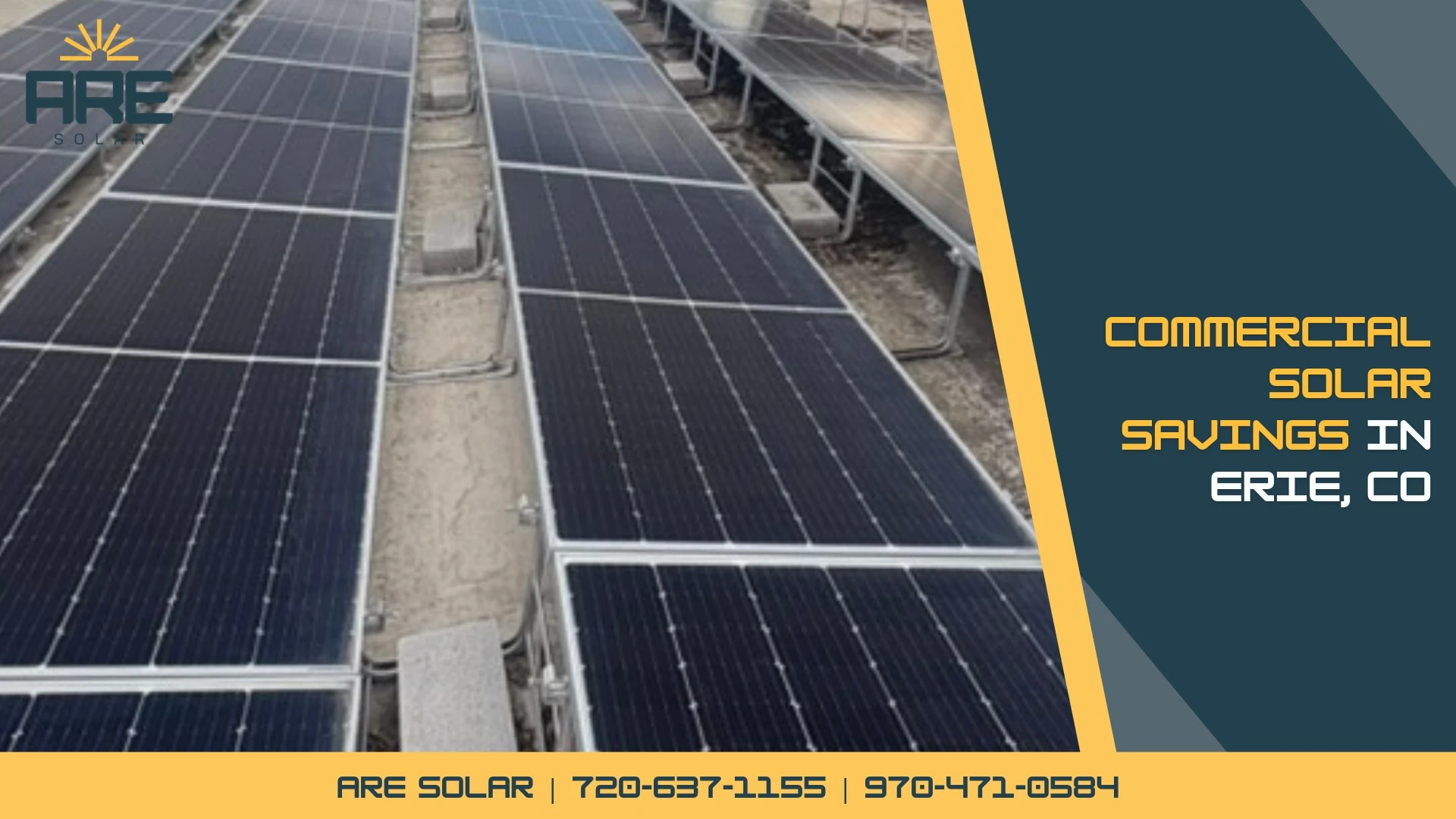
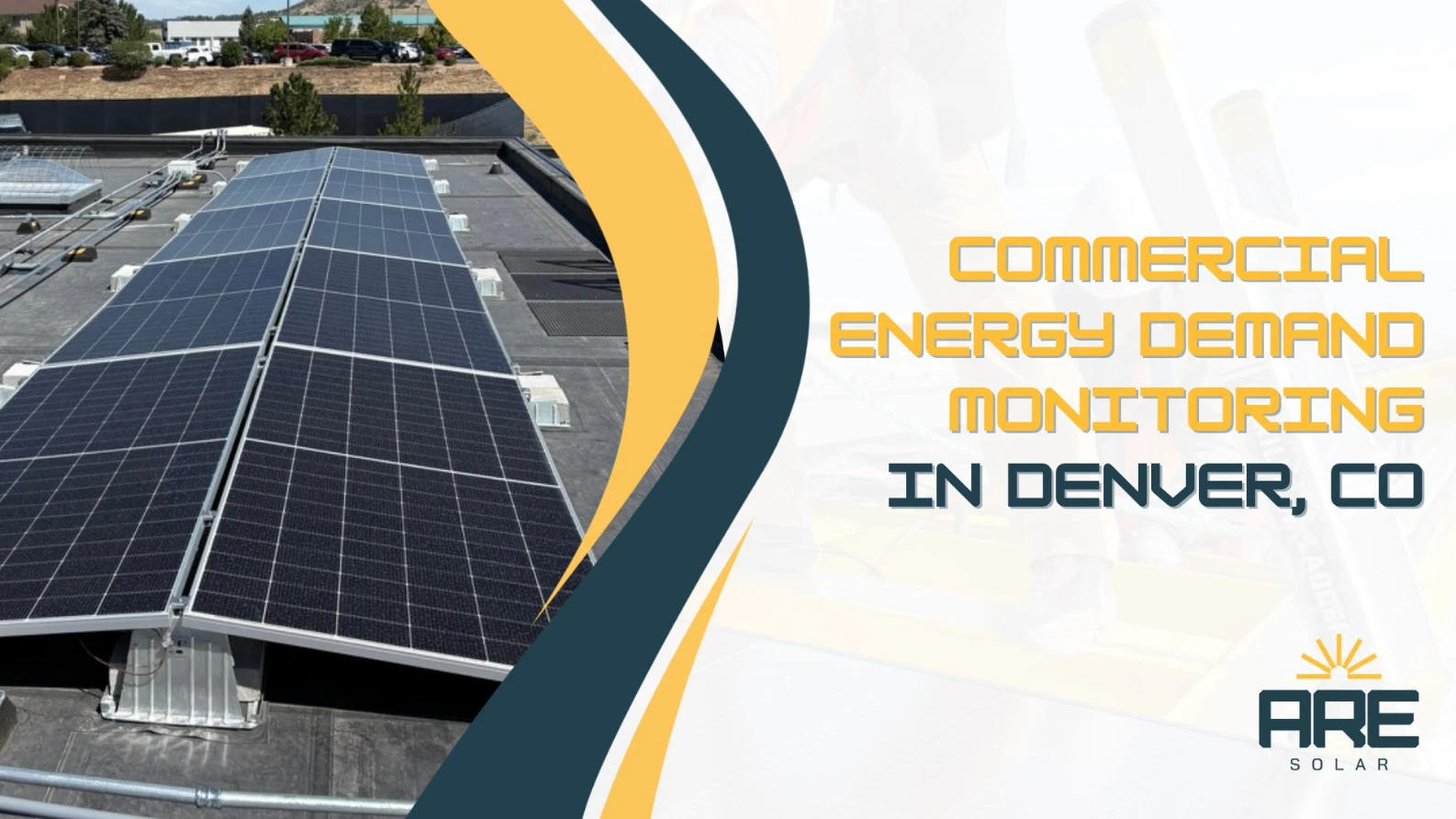
Often, yes. But the size of your roof is rarely what decides it.
Warehouse solar installation in Erie, CO turns on four questions. How much of the output will the building use? Which utility serves the meter? Will the system cross one megawatt? Is the building covered by Colorado’s benchmarking rules?
We work out of our office on Montgomery Drive in Erie. Here’s what we look at first on warehouse roofs in 2026.
Why Warehouses Break the Usual Solar Math
Many commercial buildings have more load than roof. Warehouses often flip that ratio. A dry-storage building can have acres of flat roof and a modest electric bill.
That mismatch is the central design problem for warehouse solar. Fill the roof, and you may export power for less than you pay. Size to the load, and much of the roof stays empty.
Cold storage and active distribution sites run the other way. Refrigeration, forklift charging and long shifts can absorb everything a big array produces. Our Arvada warehouse post covers load timing, roof condition and shutdown windows. Those basics apply in Erie too.
Erie’s Two Utilities Treat a Big Roof Differently
Erie is split between Xcel Energy and United Power. For a warehouse, that split changes the right system size. Confirm which utility serves your meter first.
Xcel customers fall under Colorado’s net metering law for investor-owned utilities. The law sets a ceiling of 200% of expected annual use. That’s a limit, not a guarantee. Xcel’s incentive programs can set tighter size rules. Monthly excess carries forward as credit. Xcel-served warehouses still get more room to fill a roof.
United Power is a co-op, and the co-op statute sets a smaller floor. Co-ops must offer net metering to business systems up to 25 kW. That’s a minimum, not a size cap. Larger arrays follow the co-op’s own export terms. Ask United Power how a big warehouse system would be credited before you size it.
Demand charges matter too. United Power’s 2026 rate sheet bills large accounts $22.40 per kW of anytime demand. Solar can’t be counted on to lower that number.
The co-op’s Coincidental Secondary Peak Service works differently. Its generation and transmission demand charge is $25.67 per kW. It counts your demand during the peak window.
United Power’s Coincidental Secondary Peak Service (CPS1) sets demand charges by season. Its 2026 rate sheet defines two on-peak windows. From June through September, the window runs 2 to 8 p.m., Monday through Saturday. From January through May and October through December, it runs 4 to 10 p.m., Monday through Saturday. Sundays and holidays are off-peak. The summer window overlaps strong solar hours, so solar may trim the peak-window demand charge. The non-summer window runs well past typical solar production. Weather, orientation and building operations decide how much solar offsets either peak. A separate $8.14 per kW charge applies to your highest demand anytime. For the right warehouse, the summer overlap is worth modeling closely.
Solar for Distribution Centers: Size to the Load, Not the Roof
Many distribution centers run long hours. Dock lighting, conveyors, refrigeration and charging equipment add up. Steady daytime load is what makes solar for distribution centers pay.
Start with a year of interval data, not a roof drawing. For warehouse solar installation in Erie, CO, it’s the first document we request. Map when the building actually draws power. Then size the array to cover daytime load, with room for planned growth. Our sizing guide shows the method.
System size also sets your utility review track. Smaller, technically eligible systems may qualify for streamlined interconnection review. Larger or more complex commercial installations may require additional engineering studies. Review requirements vary by utility, system capacity, and available grid infrastructure.
United Power runs its own review process. Either way, a study can add months, so file early.
Hail Belongs in the Warehouse Model
Erie gets hail often enough to plan around it. NOAA’s Storm Events Database logs past storms by county. It’s a good place to check local hail exposure.
That history should shape module choice, not just insurance. Commercial warehouse solar panels carry different hail test ratings. Ask which test your proposed module passed, and at what hail size. Modules with enhanced hail-resistance testing may offer additional protection against certain impact conditions. No rating guarantees survival in every storm.
A sound warehouse plan also covers the day after a storm. Our Erie maintenance post walks through post-storm checks.
The One-Megawatt Line on a Big Roof
Warehouse roofs can be large enough to cross a key tax threshold.
Section 48E pays 30% when prevailing wage and apprenticeship rules are met. The IRS confirms an exception for facilities under 1 MW (AC) of net output. Those projects can claim the higher rate without the labor requirements. Every project still has to meet the other federal rules, including foreign-entity sourcing limits.
Above that line, the paperwork changes. Payroll records, apprentice hours and wage rates all become part of the tax file. A 1.1 MW project that misses the labor rules gets only the 6% base rate.
Timing matters too. Solar projects starting construction after July 4, 2026 face a December 31, 2027 deadline. Our 2026 tax credit post explains the rules.
Does Colorado’s Benchmarking Program Cover Your Warehouse?
Size alone doesn’t decide it. Building Performance Colorado covers buildings of 50,000 square feet or more. But state law exempts storage facilities that lack heating and cooling. It also exempts buildings used mostly for manufacturing or industrial work. Coverage depends on how your building is used and classified.
Heating and cooling alone don’t settle it. Confirm your building’s status with the Colorado Energy Office. Covered buildings report benchmarking data by November 1 each year.
A 2025 law changed the 2026 step. Owners can meet the 2026 standard or report progress toward it. The 2030 standards still apply. Each building’s target depends on its type and compliance pathway.
If your warehouse is covered, solar may be part of the plan. To be real, whether it counts depends on your pathway. Confirm that before you size the array around a target.
Leasing the Building? Settle the Roof First
Many warehouses are leased, and the landlord controls the roof. Settle four things in writing before design begins.
Roof rights. Get written permission for the array, conduit runs and equipment locations.
Reroofing. Agree who pays to move the array if the roof needs work.
Lease term. A lease ending before payback needs a transfer or buyout clause.
Ownership. Decide who owns the system and who maintains it. Decide who gets the bill credits and who claims the tax benefits. That matters most when the landlord and the account holder differ.
Bring the lease to your first meeting with us. It shapes the design as much as the roof does.
Frequently Asked Questions
Should I fill my entire warehouse roof with panels?
Only if the building and utility rules support it. Exported power usually earns less than power used on site. Oversizing can lower your return.
Does a big array need a different approval path?
Often, yes. Larger systems can need utility studies, structural review and more electrical documentation. Fire access on a big roof gets more attention too.
Do Colorado’s benchmarking rules require solar?
No. They set performance targets for covered buildings. Solar may help, depending on your compliance pathway.
Can solar power my electric forklifts or fleet?
Often, yes. Daytime charging pairs well with daytime production.
Put Your Warehouse on the Scale
Bring us one year of interval data, your roof plans and your square footage. ARE Solar will tell you whether warehouse solar installation in Erie, CO pays for your building.
You’ll get two system sizes side by side. One fills the roof. One matches your load. We’ll show which crosses one megawatt and which utility review track each triggers.
Some warehouses should go big. Some should go small. A few shouldn’t go solar yet, and we’ll say so. Book a warehouse site visit or visit our Erie page.