How Much Can Arvada Businesses Save with Commercial Solar in 2026?
Commercial electricity costs across Colorado continue to rise, pushing many business owners in Arvada to rethink long-term energy planning. In 2026, solar is no longer viewed primarily as a sustainability initiative. It has become a financial strategy tied directly to operational efficiency, cost predictability, and long-term asset performance. For companies evaluating commercial solar in Arvada, CO, the conversation is increasingly centered on measurable ROI and stronger control over long-term operating expenses rather than short-term incentives alone.
According to the U.S. Energy Information Administration (EIA), commercial electricity prices in Colorado have continued trending upward alongside broader regional demand growth and grid modernization costs. Facilities with heavy daytime usage are especially vulnerable to utility volatility during peak demand periods. As a result, businesses are increasingly prioritizing operational predictability instead of reacting to fluctuating utility expenses year after year. ARE Solar has seen a growing number of organizations evaluate solar through the lens of long-term financial planning rather than one-time energy reduction. Commercial solar decisions in 2026 are increasingly driven by measurable operational data rather than broad sustainability goals. This article explains how commercial solar savings are calculated, what impacts return on investment, and what businesses can realistically expect from solar adoption in 2026.
Quick Answer: What Should Businesses Expect from Solar Savings in 2026?
Most commercial properties in Arvada can reduce electricity costs by approximately 20% to 45%, depending on building size, energy demand, utility rates, and installation space. Businesses with consistent daytime consumption, including warehouses, manufacturing facilities, office buildings, and retail centers, often achieve the strongest financial results because solar production aligns with peak usage periods.
In simple terms, the more electricity a business consumes during daylight hours, the faster solar offsets utility costs. Many organizations begin seeing immediate monthly savings after activation, particularly when systems are designed around real consumption data rather than generic production estimates.
Commercial systems in Colorado commonly achieve:
- Payback periods averaging 5–9 years, depending on energy usage patterns, system design, financing structure, utility rates, and incentive eligibility at the time of installation
- Utility savings lasting 25+ years
- Reduced exposure to utility rate volatility over time
According to U.S. Energy Information Administration (EIA) commercial electricity data and typical utility tariff structures in Colorado, many businesses effectively experience blended electricity costs that are often modeled in the approximate range of $0.11 to $0.16 per kWh, depending on demand charges, time-of-use pricing, and operational load patterns. As utility rates continue increasing, long-term solar savings potential grows more significant for high-consumption facilities.
ARE Solar typically evaluates utility consumption patterns, load timing, and long-term operational goals before designing systems to ensure realistic savings projections and stronger financial alignment.
Commercial Solar in Arvada, CO: What Actually Drives Savings?
Commercial solar savings are not uniform. The financial outcome depends on how effectively a system offsets expensive energy usage and aligns with a building’s operational profile.
The Three Main Sources of Commercial Solar Savings
Most businesses generate savings through three primary mechanisms:
- Direct electricity offset
- Reduced peak demand charges
- Long-term protection against utility inflation
In Arvada, many commercial utility structures include both energy consumption charges and demand-based pricing. Properly engineered solar systems can strategically reduce both categories when production aligns with daytime operations.
For example, peak sunlight hours often overlap with the highest commercial energy usage periods. That timing allows businesses to offset some of the most expensive electricity purchased from the grid.
Why System Design Matters More Than Panel Count
A common misconception is that more panels automatically equal better savings. In reality, system efficiency depends on production quality and energy alignment.
ARE Solar frequently evaluates:
- Roof orientation
- Shading conditions
- Load timing
- Utility rate structures
- Seasonal usage fluctuations
This design-first approach helps improve overall energy cost reduction in Arvada by matching production with operational demand rather than simply maximizing installation size.
Additionally, advancements in inverter efficiency and panel output in 2026 are improving energy yield per square foot, which continues strengthening commercial solar economics across Colorado.
Understanding ROI and Payback for Commercial Solar Investments
When businesses evaluate solar, the two most important questions are usually:
- “How long until the system pays for itself?”
- “What will the long-term financial return actually look like?”
Typical Commercial Solar Payback Periods
In Colorado, many commercial systems achieve payback within 5–9 years depending on:
- Electricity consumption levels
- Financing structure
- Available tax incentives
- Utility escalation rates
- System efficiency
Once payback is reached, systems often continue generating financial value for another 15–25 years or more.
Why Colorado Continues To Deliver Strong Solar ROI
The conversation around ROI commercial solar in Colorado remains strong because of several overlapping financial drivers:
- Federal Investment Tax Credit (ITC)
- Accelerated depreciation opportunities
- High daytime solar production potential
- Rising commercial electricity costs
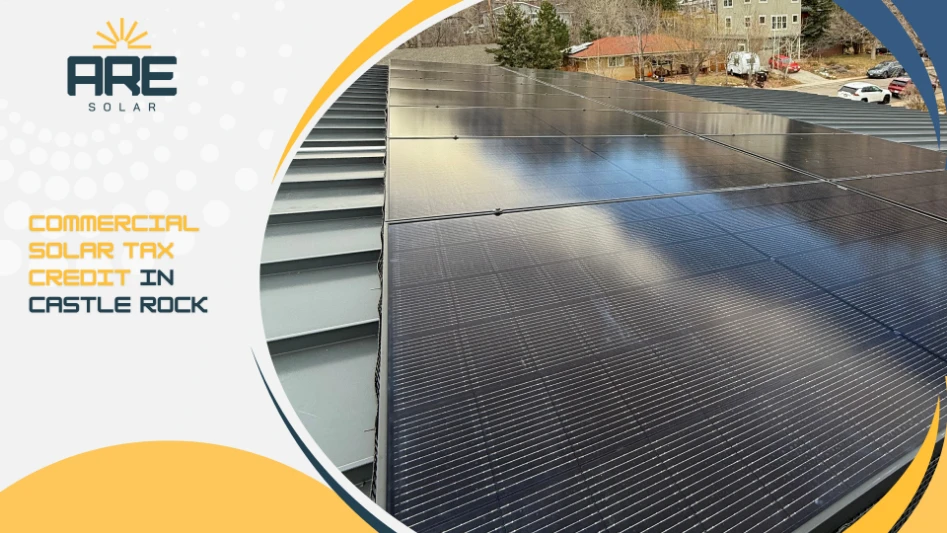
The federal solar tax credit continues helping offset upfront investment costs, while MACRS depreciation improves project economics for qualifying businesses.
ARE Solar often models conservative production scenarios to help organizations evaluate realistic outcomes rather than relying on inflated savings assumptions.
Long-Term Operational Benefits Beyond Utility Savings
Solar investments can also improve broader operational stability through:
- Better budgeting predictability
- Reduced exposure to future rate spikes
- Enhanced property efficiency
- Sustainability positioning for tenants or investors
- Potential property value improvements
For many commercial owners, those secondary advantages become equally important over time.
Why More Arvada Businesses Are Planning Solar Strategically
More businesses are incorporating solar into broader facility and capital planning decisions.
Businesses Are Treating Energy as a Controllable Expense
Historically, utility costs were viewed as unavoidable overhead. In 2026, many companies are approaching energy differently by treating it as a controllable operating variable.
This shift is especially relevant for organizations evaluating long-term facility ownership, tenant retention, or operational scalability.
Emerging Commercial Energy Trends in Colorado
Several trends continue influencing commercial solar adoption:
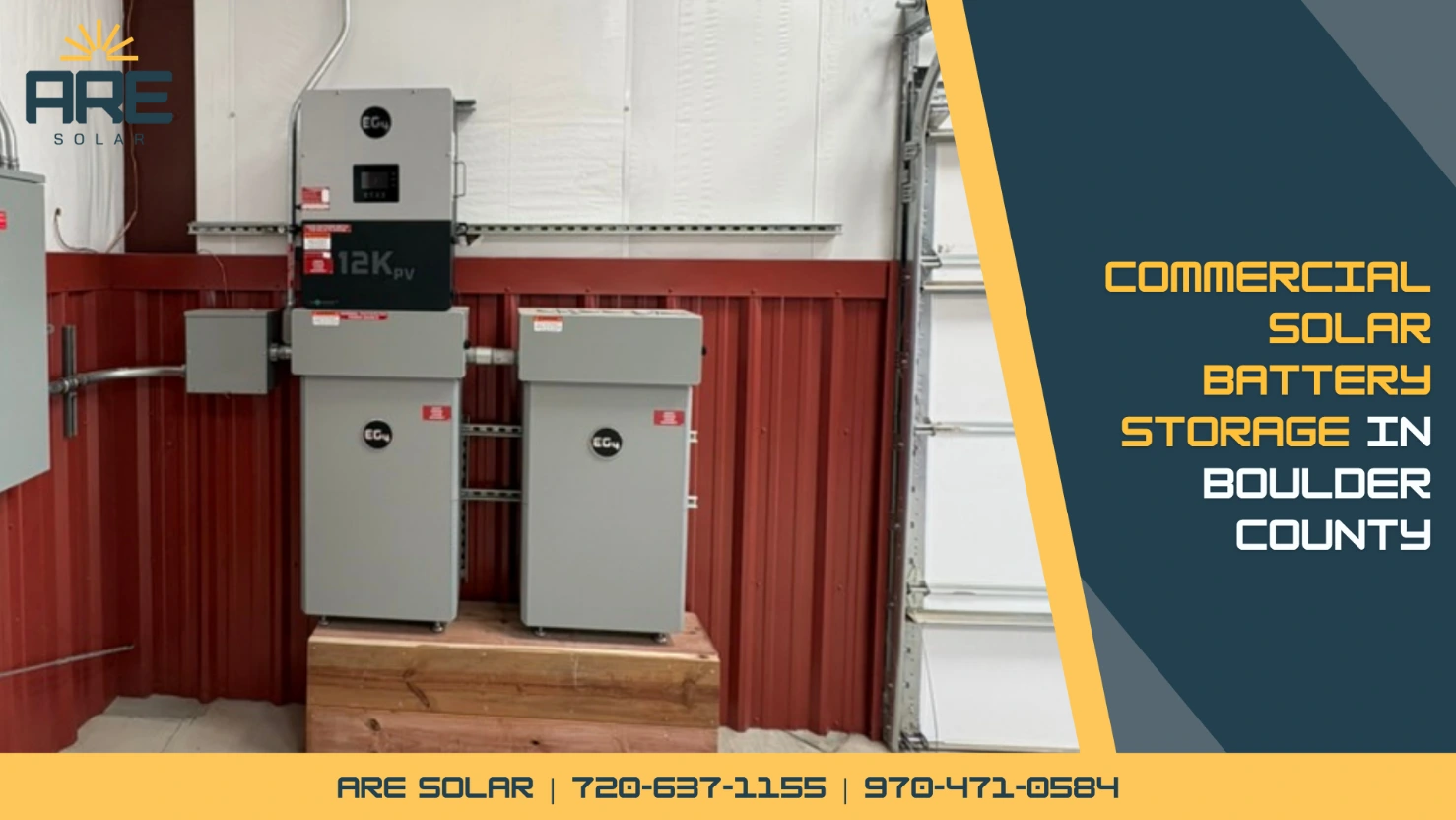
- Battery storage integration
- EV charging infrastructure
- Smart energy management systems
- ESG and sustainability reporting
- Resiliency planning for outages
The National Renewable Energy Laboratory (NREL) continues to identify Colorado as one of the stronger commercial solar production markets due to high annual solar irradiance and favorable elevation conditions.
These developments are pushing solar beyond simple electricity reduction into broader operational strategy.
For many businesses, discussions around business solar savings in Arvada are increasingly connected to long-term financial planning and infrastructure modernization rather than short-term utility reduction alone.
Frequently Asked Questions About Commercial Solar in Arvada
Is commercial solar still financially worth it in 2026?
Yes. Rising utility rates and long system lifespans continue making solar financially attractive for many commercial properties in Colorado.
Which businesses typically save the most?
Facilities with high daytime electricity usage usually benefit the most, including manufacturing buildings, warehouses, retail centers, and office properties.
How long do commercial solar systems last?
Most systems are designed to operate efficiently for 25 years or longer with proper maintenance and monitoring.
Can solar protect against future utility rate increases?
While solar does not eliminate utility dependence entirely, it can significantly reduce exposure to rising electricity costs over time.
The Cost of Waiting: Why 2026 May Be the Tipping Point for Solar ROI
Timing often impacts solar ROI just as much as system design. While some businesses delay adoption hoping for lower equipment pricing or future incentives, continued utility inflation can steadily reduce long-term savings potential. Every year a business waits is another year exposed to rising energy costs without locking in long-term production capacity.
A business delaying installation for two years may lose tens of thousands of dollars in unrealized energy offset depending on system size, operational demand, and utility escalation rates. Those missed savings are difficult to recover later, even if equipment pricing improves modestly.
ARE Solar works with commercial clients to model adoption timelines using real consumption data and long-term utility projections. For many businesses evaluating commercial solar in Arvada, CO, earlier implementation continues to provide stronger financial performance and greater control over future operating expenses.
The takeaway in 2026 is increasingly clear: solar is not just about reducing utility bills. It is about stabilizing operating costs and creating more predictable long-term energy planning.
Contact ARE Solar today to schedule a commercial solar consultation and evaluate your long-term energy savings potential.