For Colorado businesses weighing long-term investments, commercial solar has shifted from a sustainability upgrade to a financial strategy with measurable returns. Federal incentives under the Inflation Reduction Act have reshaped how businesses recover capital spent on energy infrastructure, especially for those exploring solar power for commercial building in Denver. Sections 48 and 48E of the Internal Revenue Code are now central to this conversation, offering structured, scalable tax credits designed for businesses and tax-exempt entities. These credits don’t just reduce tax liability—they directly improve project economics when properly planned.
In a market like Denver, where commercial energy demand continues to rise, understanding how these credits work can mean the difference between a good project and a truly profitable one. Timing, compliance, and system design all play critical roles. With the right approach, solar can function as a revenue-protecting asset rather than a sunk cost.

What Sections 48 & 48E Actually Do for Businesses
At their core, Sections 48 and 48E function as Investment Tax Credits (ITC) for commercial and tax-exempt solar projects. These credits allow eligible entities to deduct a percentage of their qualified solar investment directly from federal taxes owed. For projects placed in service after December 31, 2024, the base credit begins at 6%.
However, the structure is intentionally layered. Congress designed these credits to reward projects that meet specific labor, sourcing, and location standards. When applicable, those conditions can significantly increase the total credit value.
Base Credit vs. Maximum Credit
- 6% base rate for qualifying projects
- Up to 30% for projects over 1 megawatt (MW) that meet Prevailing Wage & Apprenticeship (PWA) requirements
- Up to 10% additional through Domestic Content or Energy Community adders, when eligible
For most small- to mid-sized commercial projects (under 1 MW), the PWA requirements do not apply. However, eligibility for bonus adders may still depend on project location and sourcing considerations.
For commercial property owners, this means incentives are no longer one-size-fits-all. Strategic planning now directly impacts financial outcomes, particularly when evaluating project size, siting, and procurement strategy.
How Businesses Claim 48/48E (And Why Strategy Matters)
ITC vs. PTC: Choosing the Right Credit Structure
Before filing anything, businesses must choose between:
- Investment Tax Credit (ITC) under Sections 48/48E
- Clean Electricity Production Tax Credit (PTC)
The PTC provides a per-kilowatt-hour credit (starting at 0.3 cents/kWh, inflation-adjusted) over time. While useful in certain utility-scale scenarios, most commercial building owners favor the ITC because it delivers immediate, front-loaded value based on total project cost.
For small to mid-sized commercial solar installations, the ITC is typically the more practical and financially impactful option.
Understanding PWA Requirements (And When They Apply)
Prevailing Wage & Apprenticeship (PWA) requirements are often discussed in connection with the 30% ITC, but they do not apply to every commercial solar project.
For projects under 1 megawatt (MW) in size, PWA compliance is generally not required to access the full 30% credit. This is important for most commercial property owners, as sub-1 MW systems represent the majority of rooftop and on-site installations.
PWA requirements are primarily relevant to larger projects over 1 MW or certain projects that do not meet specific exemptions.
By properly sizing and structuring a project from the start, businesses can often maximize incentives without triggering unnecessary labor compliance costs.
Filing the Correct IRS Forms
To officially claim the credit:
- IRS Form 3468 is used to calculate and claim the ITC
- IRS Form 3800 reports the credit under the General Business Credit
Errors or omissions can delay or reduce credit value, which is why many businesses coordinate solar planning with tax professionals from the start.
Solar Power for Commercial Building in Denver: Why Geography Changes the Math
Denver is uniquely positioned when it comes to commercial solar economics. High solar irradiance, rising utility costs, and a strong clean-energy policy environment combine to amplify the value of federal incentives. For businesses evaluating solar power for their commercial building in Denver, these regional factors directly affect payback timelines.
In practice, federal credits often cover a substantial portion of upfront system costs, while local conditions enhance long-term savings. Many Denver businesses deploying a solar system for commercial building in Denver see improved internal rate of return (IRR) compared to similar projects in lower-sun or higher-regulation markets. Energy community adders may also apply in certain areas, further increasing credit value.
Local expertise matters here. Providers like ARE Solar understand Denver’s permitting environment, utility interconnection requirements, and how system design choices interact with federal incentives.
Storage, PWA Rules, and Key Updates Businesses Should Know
Energy Storage Now Qualifies
Under the Inflation Reduction Act, standalone energy storage systems now qualify under Sections 48 and 48E. This includes:
- Battery energy storage systems (minimum 5 kWh)
- Thermal energy storage
For commercial properties, storage enhances demand management, resilience, and long-term operational savings, all while still qualifying for federal incentives.
Breaking Down the PWA Adder
To earn the full 30% credit through PWA:
- Prevailing Wages must meet or exceed local standards
- Apprenticeship Requirements must be met during construction
Meeting these criteria multiplies the base credit by five. Alternatively, qualifying for an exception still allows access to the higher rate. This is where experienced project coordination becomes critical.
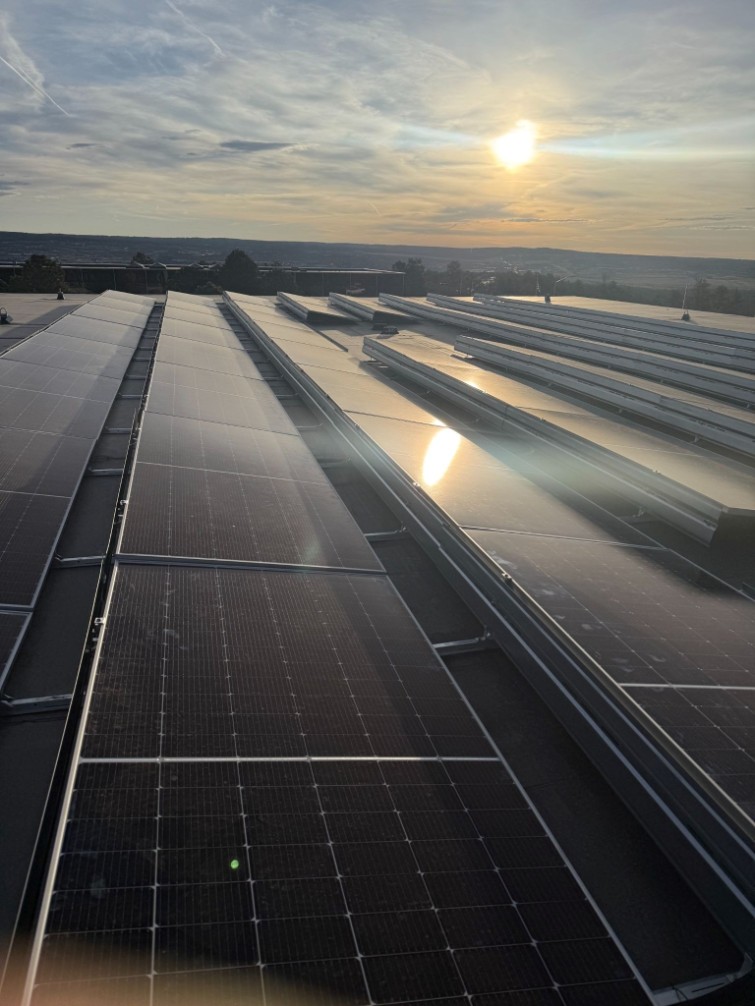
ARE Solar Makes the Numbers Work
ARE Solar works with Denver-area businesses every day that want solar to do more than just offset energy use. We help them turn incentives like 48 and 48E into real financial leverage. From early feasibility and compliance planning to system design and credit optimization, we focus on outcomes, not just installations. For companies considering solar power for commercial building in Denver, we understand how to align federal incentives with local realities and long-term operational goals.
Our role is to make sure your investment performs on every level: financial, operational, and environmental. When you’re ready to explore what these tax credits can truly do for your business, reach out to us and we’re ready to guide the process from start to finish.