Analyzing Commercial Solar in Erie: Delayed Decisions, Higher Costs?
For many business owners in Erie, CO, solar feels like a strategic move but not always an urgent one. Leadership teams often place it in the “next capital cycle” category, assuming there will be a better time financially or operationally. Technology will improve. Budgets will open up. Incentives will still be there. But commercial energy decisions do not exist in a vacuum. They are influenced by rising utility rates, tax law timing, depreciation schedules, and regional growth patterns.
When evaluating commercial solar systems in Erie, the question is rarely whether solar makes sense long term. The more critical question is whether waiting five years quietly erodes financial performance in ways that are difficult to recover. In a rapidly developing community like Erie, where commercial expansion and energy demand continue to rise, delay can compound costs. This analysis models what actually happens when a business chooses to wait.
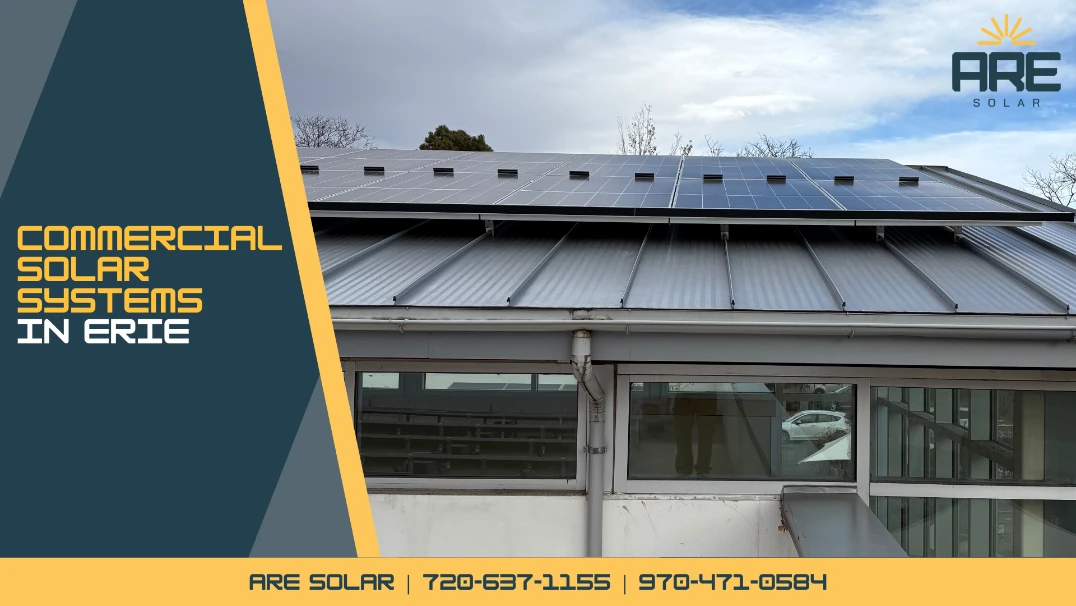
Rising Utility Rates: The Silent Compounding Expense
Electricity is an operational necessity. Unlike discretionary spending, it cannot be paused during inflationary cycles. That makes it one of the most powerful compounding expenses on a company’s balance sheet.
The Math Behind Energy Inflation
Utility rate increases of even 3-6% annually can significantly impact long-term cost exposure. A commercial property spending $150,000 per year on electricity could see that expense rise to well over $175,000 within five years under moderate rate growth assumptions. That difference is not theoretical. It becomes a recurring line item that reduces margin and increases forecasting uncertainty.
For companies evaluating solar energy for companies in Erie, delaying installation means continuing to absorb full retail electricity pricing with no hedge against volatility. Solar functions as a stabilizer. It converts a fluctuating operating cost into a predictable capital asset.
Erie’s Growth and Demand Pressures
Erie, CO continues to experience residential and commercial development. As communities expand, infrastructure demand increases. Over time, grid upgrades and transmission investments can influence rate structures. Businesses that install solar earlier effectively lock in a portion of their long-term energy pricing before those pressures intensify.
Waiting five years does not hold energy costs steady. It increases exposure to compounded escalation.
Commercial Solar Systems in Erie: The Cost of a Five-Year Delay
When modeling a delay scenario, four primary financial variables shift: utility costs, tax credits, depreciation, and cash flow timing.
Federal Incentives: Timing Matters
Under Sections 48 and 48E of the Internal Revenue Code, qualifying commercial solar projects are eligible for Investment Tax Credits (ITC) that directly reduce federal tax liability. For projects placed in service after December 31, 2024, the base credit begins at 6%, with opportunities for higher total credit values depending on structure and eligibility.
For most small- to mid-sized commercial systems under 1 megawatt, Prevailing Wage & Apprenticeship requirements do not apply. That makes incentive optimization more straightforward for many Erie businesses.
Cash Flow Acceleration vs. Cash Flow Deferral
An immediate installation creates earlier savings. Those savings compound. Each year of solar production offsets grid purchases, improving operational cash flow.
A five-year delay does not eliminate savings but shifts them. But that shift reduces net present value. Dollars saved today are more valuable than dollars saved five years from now. From a capital performance standpoint, timing directly influences internal rate of return (IRR).
Depreciation Strategy: An Overlooked Financial Lever
Tax credits are only part of the equation. Depreciation plays an equally critical role in commercial solar economics.
Accelerated Depreciation and Early-Year Impact
When a system is placed in service, depreciation begins. That depreciation reduces taxable income, improving after-tax cash flow. The earlier the asset is operational, the earlier those financial advantages are realized.
Delaying installation by five years pushes depreciation schedules five years into the future. That means postponing a series of tax benefits that could otherwise strengthen early returns.
For companies considering going solar, the timing of depreciation often narrows payback periods significantly. Early adoption compresses ROI timelines. Delayed adoption extends them.
Operational Leverage and Competitive Positioning
Beyond spreadsheets and tax forms, timing also affects strategic positioning.
Energy Cost Stability as a Competitive Edge
Businesses with stabilized energy costs are better positioned to forecast pricing, manage margins, and reinvest capital. In competitive industries, even small operating advantages accumulate over time.
Installing solar energy for companies in Erie today can reduce exposure to external price shocks. That stability supports long-term planning and capital allocation decisions.
Brand and ESG Considerations
Environmental, Social, and Governance (ESG) performance increasingly influences partnerships, customer loyalty, and investor perception. Early adopters demonstrate leadership. Delayed adopters risk appearing reactive rather than proactive.
In growing communities like Erie, visible solar infrastructure also signals long-term commitment to sustainability and innovation.
Capacity, Backlogs, and Market Timing
Financial modeling often ignores logistical realities.
As more businesses adopt solar, interconnection queues and installation schedules can tighten. Peak demand periods may create pricing pressure or extended timelines. Acting during stable market conditions often results in smoother project execution.
Waiting until solar adoption accelerates further may introduce avoidable friction. Early movers typically benefit from flexibility in scheduling and design optimization.
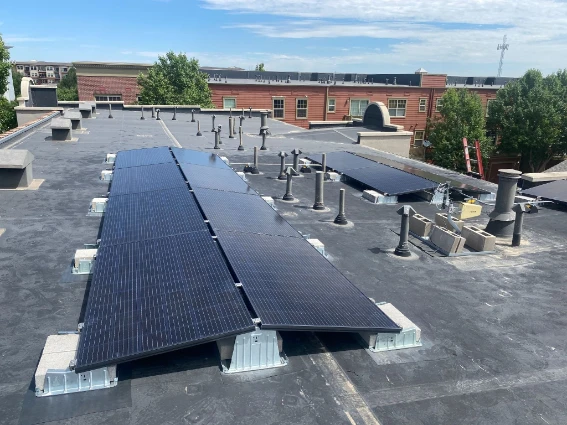
From Analysis to Action: ARE Solar Helps Erie Businesses Move Forward
At ARE Solar, we believe financial clarity eliminates hesitation. We work directly with business owners and leadership teams in Erie to model real-world outcomes. Our goal is simple: help you see exactly what waiting costs. We are here to provide clear, data-driven guidance. If the numbers support moving forward now, we will show you why. Our team understands local permitting, system sizing strategies under 1 MW, and how to align tax incentives with business objectives.
If you are considering commercial solar systems in Erie, now is the time to run the numbers strategically. Let’s evaluate your facility, your energy usage, and your long-term goals. Contact us today to schedule a consultation. The real question is no longer whether solar works. It is whether waiting is quietly costing your business more than you realize, and we are ready to help you find out.